
Why Fatigue Can Occur During GLP-1 Weight Loss
Fatigue can occur during treatment with GLP-1-based medications such as semaglutide and tirzepatide, especially when appetite decreases substantially and overall calorie intake falls.
In many cases, the medication itself may not be the only explanation. Patients may also be eating less protein, drinking less fluid, reducing carbohydrate intake, sleeping poorly, or losing weight too rapidly. These factors can contribute to low energy, weakness, and reduced exercise tolerance.
Fatigue during GLP-1 weight loss can therefore have several possible causes. Dehydration, inadequate caloric intake, low protein intake, gastrointestinal symptoms, changes in blood glucose, medication interactions, and loss of lean body mass may all play a role.
Some fatigue may be temporary, particularly during treatment initiation or after a dose increase. However, persistent or progressive fatigue should not automatically be dismissed as an expected side effect.
Maintaining adequate nutrition is particularly important. Significant calorie restriction without sufficient protein, micronutrients, and overall energy can reduce exercise performance and make it more difficult to preserve skeletal muscle.
Hydration also matters. Nausea, vomiting, diarrhea, or simply drinking less because appetite is reduced can contribute to dehydration, dizziness, and fatigue.
The objective in evaluating fatigue during GLP-1 weight loss is therefore to identify whether the problem is related to medication tolerance, inadequate intake, dehydration, sleep, muscle loss, another medication, or an unrelated medical condition.
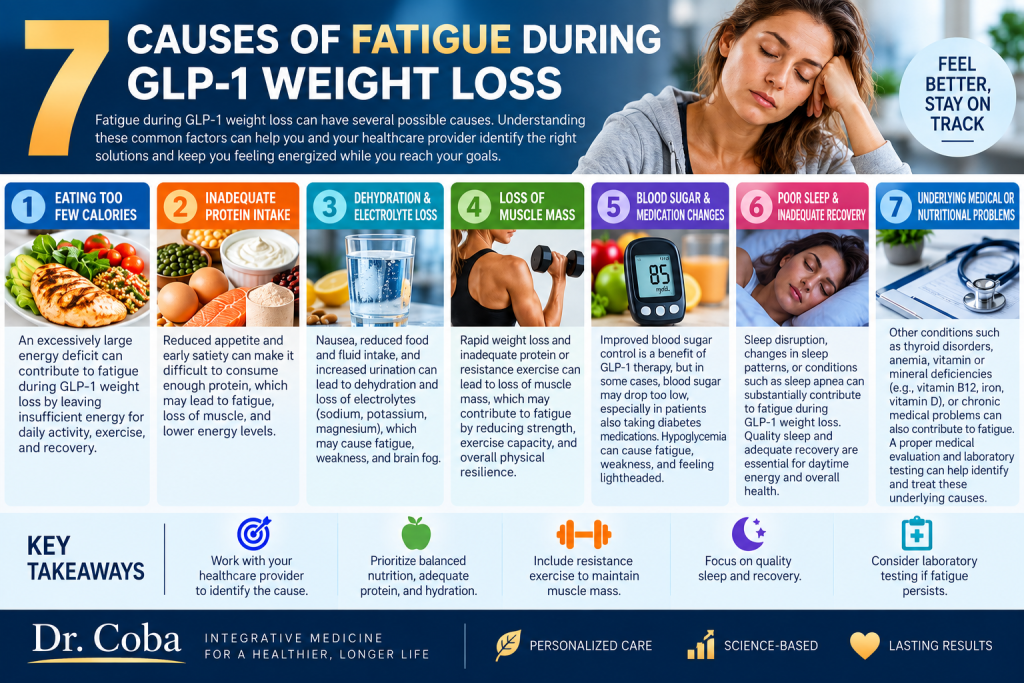
7 Important Causes of Fatigue During GLP-1 Weight Loss
1. Eating Too Few Calories
GLP-1 medications can substantially reduce hunger and increase satiety. For some patients, this effect is strong enough that daily calorie intake falls much more than intended.
An excessively large energy deficit can intensify fatigue during GLP-1 weight loss by leaving insufficient energy for normal daily activity, exercise, and recovery. Patients may experience fatigue, weakness, reduced concentration, or declining exercise performance.
This can occur unintentionally. Because hunger is suppressed, a patient may skip meals or consume very small portions without recognizing how little total energy is being consumed throughout the day.
Rapid weight loss can be a clue that the energy deficit is particularly large, although the appropriate rate of weight loss varies according to starting body weight, body composition, medical status, and treatment goals.
Simply increasing calories indiscriminately is not necessarily the solution. The nutritional quality of those calories matters. Meals should prioritize adequate protein, essential nutrients, vegetables, fruits, and other nutrient-dense foods appropriate to the individual’s needs.
When fatigue during GLP-1 weight loss develops alongside very low food intake or unexpectedly rapid weight loss, overall energy intake should be reviewed as one possible contributing factor.
2. Inadequate Protein Intake
Reduced appetite and early satiety can contribute to fatigue during GLP-1 weight loss when they make it difficult for patients to consume adequate protein and overall nutrition.
Protein is essential for maintaining skeletal muscle during weight loss. When calorie intake decreases substantially and protein intake is inadequate, loss of lean body mass may become a greater concern.
Muscle loss can affect more than body composition. Reduced muscle mass and strength may contribute to weakness, lower exercise capacity, impaired physical function, and the perception of persistent low energy.
Protein requirements vary according to age, body size, kidney function, physical activity, health status, and the degree of calorie restriction. For this reason, an individualized protein target is preferable to assuming that one amount is appropriate for everyone.
When large meals are difficult to tolerate, distributing protein across several smaller meals can make adequate intake easier. Eggs, fish, poultry, Greek yogurt, cottage cheese, lean meats, legumes, and appropriately selected protein supplements are possible options depending on individual needs and tolerance.
Resistance training should also accompany adequate protein intake whenever medically appropriate because the combination provides a stronger stimulus for preserving muscle than nutrition alone.
When fatigue during GLP-1 weight loss occurs together with reduced strength, poor exercise recovery, or very low food intake, protein intake and preservation of lean body mass deserve particular attention.
3. Dehydration and Electrolyte Losses
Reduced food intake can also reduce total fluid consumption because a meaningful portion of daily water normally comes from foods and beverages consumed with meals.
GLP-1 therapy may further increase the risk of inadequate hydration when nausea, vomiting, diarrhea, or pronounced early satiety makes drinking uncomfortable. Even modest fluid deficits can contribute to headache, dizziness, weakness, and reduced exercise tolerance.
Vomiting and diarrhea can cause losses of both water and electrolytes. When gastrointestinal symptoms are significant, simply drinking additional plain water may not fully address the resulting fluid and electrolyte imbalance.
Urine output and symptoms can provide practical clues. Persistently dark urine, reduced urination, dry mouth, orthostatic dizziness, or unusual weakness may suggest that hydration status deserves closer attention.
Fluid requirements vary according to body size, activity, climate, medications, kidney and cardiovascular function, and gastrointestinal losses. Patients should therefore avoid assuming that one fixed volume of water is appropriate for everyone.
Persistent vomiting, inability to maintain fluids, markedly reduced urination, fainting, confusion, or severe weakness warrants prompt medical evaluation.
When fatigue during GLP-1 weight loss occurs together with symptoms of inadequate hydration, fluid intake and potential electrolyte losses should be considered as possible contributing factors.
4. Loss of Muscle Mass During Weight Loss
Weight loss does not consist exclusively of body fat. Depending on nutritional intake, physical activity, age, and the magnitude of the calorie deficit, some lean body mass can also be lost during treatment.
Skeletal muscle is particularly important for strength, mobility, metabolic health, and the ability to perform everyday activities. Excessive loss of muscle may contribute to fatigue during GLP-1 weight loss by reducing strength, exercise capacity, and overall physical resilience.
Older adults deserve particular attention because age-related loss of muscle mass may already be present before weight-loss treatment begins. A substantial calorie deficit without adequate protein and resistance exercise can further challenge preservation of lean tissue.
Resistance training provides a direct stimulus for maintaining muscle during weight loss. Exercises should be individualized according to physical condition, orthopedic limitations, cardiovascular status, and previous training experience.
Adequate protein intake complements resistance training by supplying amino acids needed for muscle protein synthesis. Neither strategy should be viewed in isolation when preservation of lean mass is an important treatment objective.
Changes in strength and physical function can sometimes be more informative than body weight alone. Progressive difficulty with exercise, climbing stairs, carrying objects, or other previously comfortable activities deserves attention.
When fatigue during GLP-1 weight loss is accompanied by declining strength or physical performance, preservation of skeletal muscle and lean body mass should be evaluated as part of the overall treatment strategy.
5. Blood Sugar Changes and Other Medications
Changes in food intake and body weight can alter glucose patterns, particularly in patients being treated for diabetes. Fatigue, weakness, shakiness, sweating, dizziness, confusion, or palpitations may sometimes be associated with low blood glucose rather than with GLP-1 therapy alone.
The risk of hypoglycemia is especially relevant when a GLP-1 medication is used together with medications that can independently lower blood glucose, such as insulin or sulfonylureas. Medication requirements may change as appetite decreases, weight is lost, and glucose control improves.
Patients taking glucose-lowering medications should follow an individualized monitoring plan and discuss recurrent low readings or symptoms with the prescribing clinician. Medication doses should not be adjusted solely on the basis of fatigue without considering glucose measurements and the overall clinical picture.
Other medications can also contribute to tiredness or dizziness. Blood-pressure medications, sedating medications, and other therapies may require reassessment when substantial weight loss or changes in food and fluid intake alter the patient’s usual physiologic response.
Patients without diabetes can also experience fatigue from prolonged periods of very low caloric intake, although symptoms should not automatically be labeled hypoglycemia without appropriate evidence.
When fatigue during GLP-1 weight loss occurs with symptoms suggestive of abnormal glucose levels or after major changes in body weight, the medication regimen and relevant metabolic measurements should be reviewed.
6. Poor Sleep and Inadequate Recovery
Fatigue during GLP-1 weight loss is not always caused directly by medication or nutrition; inadequate sleep and recovery can also contribute substantially to low energy. Sleep duration, sleep quality, stress, and physical recovery can substantially influence energy levels during any weight-loss program.
Patients who are exercising more while simultaneously consuming fewer calories may require particular attention to recovery. Increasing training volume without adequate nutrition and sleep can contribute to persistent tiredness, declining performance, and reduced motivation.
Sleep disruption may also result from conditions unrelated to GLP-1 therapy. Obstructive sleep apnea, insomnia, restless legs, pain, nocturia, alcohol use, and certain medications can all interfere with restorative sleep.
Weight loss may improve some sleep-related conditions over time, but persistent daytime sleepiness or severe fatigue should not automatically be expected to resolve simply because body weight is decreasing.
A consistent sleep schedule, adequate opportunity for sleep, appropriate exercise recovery, and attention to factors that repeatedly disrupt sleep can support daytime energy and physical performance.
Patients with loud snoring, witnessed breathing pauses during sleep, morning headaches, or pronounced daytime sleepiness may require evaluation for sleep-disordered breathing rather than attributing symptoms solely to medication.
When fatigue during GLP-1 weight loss persists despite adequate nutrition and hydration, sleep quality and recovery should be considered as additional potential contributors.
7. An Underlying Medical or Nutritional Problem
Persistent fatigue should not automatically be attributed to GLP-1 therapy. Weight loss can occur at the same time as other medical or nutritional problems that independently reduce energy and physical performance.
Potential contributors can include anemia, iron deficiency, vitamin B12 or folate deficiency, thyroid dysfunction, infection, depression, sleep disorders, and other systemic conditions. The appropriate differential diagnosis depends on the patient’s symptoms, medical history, medications, diet, and physical findings.
Substantial reductions in food intake may also decrease intake of vitamins, minerals, and other essential nutrients. This becomes more important when patients routinely skip meals or consume a very limited variety of foods because appetite is markedly suppressed.
Laboratory evaluation should be individualized rather than automatically ordering an extensive panel for every patient with fatigue. The clinical history and examination can help determine whether testing such as a complete blood count, metabolic studies, thyroid testing, iron studies, or selected nutrient measurements is appropriate.
New shortness of breath, chest pain, syncope, significant palpitations, gastrointestinal bleeding, progressive neurologic symptoms, or severe unexplained weakness warrants prompt medical assessment rather than assuming the symptoms are part of weight loss.
Similarly, persistent fatigue that interferes with normal activities or continues despite adequate nutrition, hydration, sleep, and medication adjustment deserves further evaluation.
Recognizing alternative causes of fatigue during GLP-1 weight loss helps prevent a potentially treatable medical or nutritional problem from being overlooked.
How to Improve Energy During GLP-1 Weight Loss
Improving energy during GLP-1 therapy begins with identifying the most likely cause of fatigue rather than simply trying to stimulate energy with caffeine or supplements.
Adequate nutrition is a priority. Patients should consume enough total energy to support normal daily activity while maintaining an appropriate calorie deficit for weight loss. Protein intake should also be sufficient to support preservation of skeletal muscle.
Resistance exercise can complement adequate protein intake by providing a stimulus to maintain strength and lean body mass. Exercise volume and intensity should be appropriate for the patient’s conditioning, medical status, and available energy intake.
Hydration should be reviewed, particularly when nausea, vomiting, diarrhea, or reduced appetite has decreased fluid consumption. Significant gastrointestinal fluid losses may also require attention to electrolyte replacement.
Sleep and recovery are equally important. Persistent sleep deprivation can produce fatigue even when nutrition and hydration are otherwise appropriate, and symptoms suggestive of sleep apnea or another sleep disorder may require further evaluation.
Medication review may identify additional contributors, particularly in patients using glucose-lowering, blood-pressure, sedating, or other medications whose effects may change as body weight and food intake decrease.
When fatigue during GLP-1 weight loss persists despite appropriate nutrition, hydration, sleep, and activity, clinical evaluation can help determine whether laboratory testing or modification of the treatment plan is warranted.
The Bottom Line on Fatigue During GLP-1 Weight Loss
Fatigue during GLP-1 therapy can have several contributing factors, and the medication itself should not automatically be assumed to be the only cause. Reduced calorie intake, inadequate protein, dehydration, loss of lean body mass, glucose changes, poor sleep, and unrelated medical conditions can all contribute.
Nutrition deserves particular attention because profound appetite suppression can make it surprisingly easy to consume too little food. The goal is to create an appropriate energy deficit for fat loss without unnecessarily compromising protein intake, micronutrient adequacy, strength, or physical function.
Preserving skeletal muscle should remain an important component of a well-designed weight-loss program. Adequate protein combined with appropriately prescribed resistance exercise can help support lean body mass while weight decreases.
Hydration, sleep quality, medication effects, and glucose patterns should also be considered when clinically relevant. Correcting one of these factors may substantially improve energy without abandoning an otherwise effective weight-loss strategy.
Persistent fatigue should be evaluated when it interferes with normal activities, progressively worsens, or occurs despite adequate nutrition, hydration, sleep, and recovery. Symptoms such as chest pain, syncope, significant shortness of breath, severe weakness, gastrointestinal bleeding, or new neurologic abnormalities warrant prompt medical assessment.
Ultimately, addressing fatigue during GLP-1 weight loss requires identifying its underlying contributors while maintaining a treatment plan that supports fat loss, adequate nutrition, muscle preservation, and overall metabolic health.