
Understanding Low Testosterone and Diabetes
Low testosterone and diabetes are closely connected through several metabolic and hormonal pathways. Men with type 2 diabetes are more likely to have reduced testosterone levels, while testosterone deficiency frequently occurs alongside obesity, insulin resistance, and other metabolic abnormalities.
The relationship is not simply one condition causing the other. Excess visceral fat, impaired insulin sensitivity, chronic inflammation, sleep disorders, medications, aging, and changes in the hypothalamic-pituitary-gonadal axis can influence both testosterone production and glucose metabolism.
Symptoms may also overlap. Fatigue, reduced energy, loss of muscle mass, increased abdominal fat, decreased exercise capacity, and sexual dysfunction can occur in men with diabetes, testosterone deficiency, or both.
For this reason, symptoms alone cannot establish the diagnosis. Evaluation should consider metabolic health, symptoms, appropriately obtained testosterone measurements, medications, body composition, sleep, and other potential contributors.
7 Important Connections Between Low Testosterone and Diabetes
1. Type 2 Diabetes Is Associated With Lower Testosterone Levels
Men with type 2 diabetes have a higher prevalence of low testosterone than men without diabetes. This association is particularly evident when diabetes occurs together with obesity, insulin resistance, and increased visceral fat.
Several mechanisms may contribute. Insulin resistance, inflammation, altered signaling within the hypothalamic-pituitary-gonadal axis, and obesity-related hormonal changes can interfere with normal testosterone production and regulation.
Importantly, a single low testosterone measurement does not establish testosterone deficiency. Testosterone levels vary with time of day, illness, sleep, nutrition, medications, and other factors. Diagnosis generally requires compatible symptoms together with appropriately obtained and confirmed laboratory measurements.
Therefore, men with diabetes who develop symptoms suggestive of testosterone deficiency may benefit from appropriate hormonal evaluation rather than assuming those symptoms are caused by diabetes alone.
2. Insulin Resistance Can Affect Testosterone Production
Insulin resistance is a central feature of type 2 diabetes and may also contribute to the hormonal abnormalities seen in men with low testosterone. As tissues become less responsive to insulin, changes in glucose metabolism often occur together with increased visceral fat, inflammation, and alterations in reproductive hormone signaling.
Insulin resistance and obesity may influence the hypothalamic-pituitary-gonadal axis, which regulates testosterone production. In some men, this can contribute to a functional reduction in testosterone without primary disease of the testes.
Insulin also affects sex hormone-binding globulin (SHBG), the protein that carries much of the testosterone circulating in the bloodstream. Metabolic disease and obesity can lower SHBG, which may reduce measured total testosterone and complicate interpretation of laboratory results.
For this reason, evaluating low testosterone and diabetes may require more than looking at a single total testosterone value. Clinical symptoms, repeat morning testosterone measurements, SHBG, and free testosterone may be considered when appropriate to obtain a more accurate hormonal assessment.
3. Visceral Fat Connects Low Testosterone and Diabetes
Visceral fat is the metabolically active fat stored around the abdominal organs. Excess visceral fat is strongly associated with insulin resistance, type 2 diabetes, inflammation, and other cardiometabolic risk factors.
Body composition and testosterone can also influence one another. Men with testosterone deficiency may experience reduced lean muscle mass and increased body fat, while obesity itself can contribute to lower testosterone levels through hormonal and metabolic mechanisms.
This can create a reinforcing cycle. Increasing abdominal fat may worsen insulin resistance and contribute to lower testosterone, while reduced muscle mass and physical activity may further impair glucose utilization and metabolic health.
For men with low testosterone and diabetes, improving body composition through appropriate nutrition, resistance exercise, aerobic activity, weight management, adequate sleep, and treatment of underlying metabolic disease can therefore be an important part of a comprehensive strategy.
4. Muscle Mass Plays an Important Role in Glucose Control
Skeletal muscle is one of the body’s major sites for glucose disposal. After meals, insulin helps move glucose from the bloodstream into muscle cells, where it can be used for energy or stored for later use.
Testosterone contributes to the maintenance of lean body mass. Men with testosterone deficiency may experience progressive loss of muscle mass and strength, particularly when low testosterone occurs together with aging, physical inactivity, obesity, or chronic disease.
Reduced muscle mass can have metabolic consequences because less metabolically active muscle tissue may contribute to impaired glucose handling. In men with diabetes, preserving muscle becomes especially important for maintaining physical function and supporting insulin sensitivity.
Resistance training, adequate protein intake, regular physical activity, and appropriate management of hormonal and metabolic conditions can help preserve lean mass. For men with low testosterone and diabetes, improving muscle health should therefore be considered part of the broader strategy for supporting metabolic health.
5. Diabetes Can Complicate Testosterone Testing
Interpreting testosterone levels in men with type 2 diabetes can be more complex than simply comparing a total testosterone result with a laboratory reference range.
Obesity, insulin resistance, and type 2 diabetes are often associated with lower levels of sex hormone-binding globulin (SHBG). Because much of the testosterone circulating in the bloodstream is bound to SHBG, a reduced SHBG level can lower measured total testosterone even when the biologically available hormone picture is more complicated.
Timing also matters. Testosterone levels typically vary during the day and can be temporarily affected by acute illness, inadequate sleep, caloric restriction, medications, and other physiological stressors.
When results are borderline or do not correspond with the clinical picture, repeat morning testosterone testing and assessment of free testosterone or SHBG may be appropriate. The objective is to confirm true testosterone deficiency rather than diagnosing it from a single laboratory result.
For men with low testosterone and diabetes, accurate laboratory interpretation is particularly important before deciding whether testosterone replacement therapy should be considered.
6. Sexual Symptoms May Reflect Both Diabetes and Low Testosterone
Sexual symptoms are common in men with type 2 diabetes, but their underlying causes can vary. Erectile dysfunction, reduced libido, decreased sexual satisfaction, and changes in energy may involve hormonal, vascular, neurological, metabolic, medication-related, or psychological factors.
Diabetes can damage blood vessels and peripheral nerves that are important for normal erectile function. At the same time, testosterone deficiency may contribute to reduced sexual desire and can coexist with erectile dysfunction.
This distinction matters because testosterone therapy is not a universal treatment for erectile dysfunction. A man with normal testosterone may have erectile difficulties primarily related to vascular disease, diabetic neuropathy, medications, or other causes.
When sexual symptoms occur in men with low testosterone and diabetes, evaluation should consider testosterone status together with glucose control, cardiovascular risk factors, medications, neurological health, and erectile function rather than assuming a single cause.
7. Testosterone Therapy Is Not a Treatment for Diabetes
Testosterone replacement therapy may be appropriate for selected men who have confirmed testosterone deficiency and compatible symptoms, but it should not be viewed as a primary treatment for type 2 diabetes.
Some studies have reported changes in body composition, insulin sensitivity, or glycemic measures in men receiving testosterone therapy. However, these findings do not replace established approaches to diabetes management, and treatment decisions should be based on the diagnosis of testosterone deficiency rather than the expectation that testosterone will control blood glucose.
Nutrition, physical activity, weight management, appropriate diabetes medications, blood pressure control, lipid management, adequate sleep, and smoking cessation when applicable remain central components of reducing cardiometabolic risk.
For men with low testosterone and diabetes, the objective is to treat each condition appropriately while recognizing how hormonal, metabolic, and cardiovascular factors interact.
Testosterone therapy, when clinically indicated, should therefore complement—not replace—a comprehensive strategy for diabetes and cardiovascular risk management.
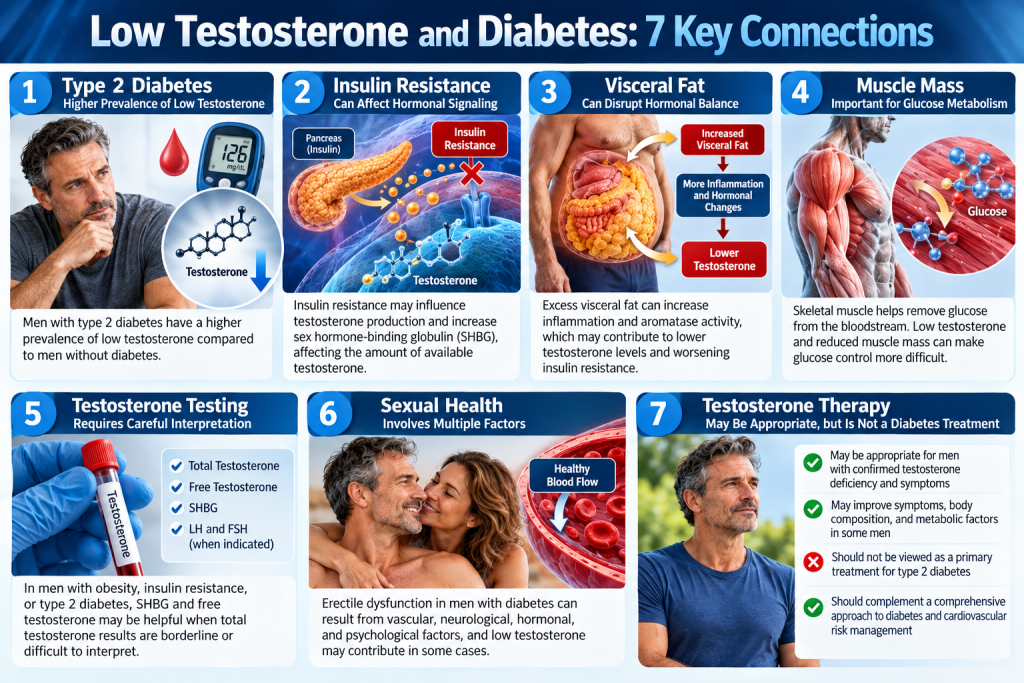
How to Evaluate Low Testosterone and Diabetes
Evaluation should determine whether testosterone deficiency is truly present while also assessing the metabolic factors that may contribute to symptoms and hormonal changes.
A comprehensive history may include fatigue, reduced libido, erectile difficulties, changes in muscle mass or body fat, exercise capacity, sleep quality, medications, weight changes, diabetes history, and other medical conditions.
When testosterone deficiency is suspected, appropriately timed testosterone measurements are important. A low result generally requires confirmation. In men with obesity, insulin resistance, or type 2 diabetes, SHBG and free testosterone may provide additional information when total testosterone results are borderline or difficult to interpret.
Metabolic evaluation may include hemoglobin A1c, fasting glucose, lipid levels, blood pressure, kidney function, body composition, and other testing according to the individual’s clinical circumstances.
The purpose of evaluating low testosterone and diabetes together is not to assume that one condition caused the other. It is to identify hormonal and metabolic abnormalities accurately so that each can be managed appropriately within a comprehensive treatment strategy.
How to Improve Metabolic Health When Testosterone Is Low
Improving metabolic health is important for men with testosterone deficiency because obesity, insulin resistance, physical inactivity, poor sleep, and loss of muscle mass can influence both glucose regulation and hormonal health.
Regular resistance training can help preserve or increase skeletal muscle, while aerobic activity supports cardiovascular fitness and insulin sensitivity. Combining both forms of exercise can be particularly useful for men with type 2 diabetes when medically appropriate.
Nutrition should emphasize sustainable glucose control and healthy body composition. Adequate protein, fiber-rich vegetables, minimally processed foods, appropriate carbohydrate intake, and healthy dietary fats can support metabolic health while helping preserve lean mass during weight reduction.
Weight loss can be particularly important for men with excess visceral fat. In some men with obesity-related functional testosterone suppression, improving body composition and metabolic health may also improve endogenous testosterone levels.
Sleep disorders should not be overlooked. Obstructive sleep apnea, insufficient sleep, and disrupted circadian patterns can adversely affect metabolic health and may also influence testosterone levels.
For men with low testosterone and diabetes, the most comprehensive approach addresses glucose control, body composition, muscle preservation, cardiovascular risk, sleep, and confirmed hormonal deficiency rather than treating testosterone as an isolated laboratory value.
The Bottom Line on Low Testosterone and Diabetes
Low testosterone and diabetes are connected through a complex relationship involving insulin resistance, visceral fat, body composition, muscle mass, inflammation, sleep, and hormonal regulation.
Men with type 2 diabetes have a higher prevalence of low testosterone, but this association does not mean that every man with diabetes has testosterone deficiency or that diabetes alone is responsible for a low testosterone result.
Diagnosis should be based on compatible symptoms together with appropriately obtained and confirmed testosterone measurements. In men with obesity or metabolic disease, SHBG and free testosterone may sometimes provide additional information when total testosterone is difficult to interpret.
When testosterone deficiency is confirmed, treatment decisions should be individualized. Testosterone replacement therapy may be appropriate for selected men, but it should not replace established treatment for diabetes, obesity, hypertension, abnormal lipid levels, or other cardiovascular risk factors.
The most comprehensive approach to low testosterone and diabetes combines accurate hormonal evaluation with glucose management, healthy body composition, preservation of muscle mass, regular physical activity, appropriate nutrition, adequate sleep, and individualized medical care.
Pingback: Blood Sugar Management Fort Lauderdale: 7 Powerful Strategies