
Why Protein Intake Matters During GLP-1 Weight Loss
GLP-1-based medications such as semaglutide and tirzepatide can produce substantial weight loss by reducing appetite and energy intake. That can be beneficial for patients with obesity or overweight, but it also creates an important nutritional challenge: eating less can make it harder to consume enough protein to support skeletal muscle.
During significant weight reduction, some lean tissue can be lost along with body fat. This is especially relevant in older adults, patients with low baseline muscle mass, and people losing weight rapidly.
Adequate protein intake during GLP-1 weight loss can help support muscle protein synthesis, recovery from resistance training, strength, and physical function. Protein also contributes to satiety and can help improve the quality of a reduced-calorie diet.
However, protein needs are not identical for every patient. Age, body size, kidney function, activity level, baseline muscle mass, total calorie intake, and medical history all influence the appropriate target.
For this reason, the goal should not simply be “eat more protein.” The better strategy is to provide enough high-quality protein, distributed appropriately across the day, while maintaining adequate calories, micronutrients, hydration, and resistance exercise.
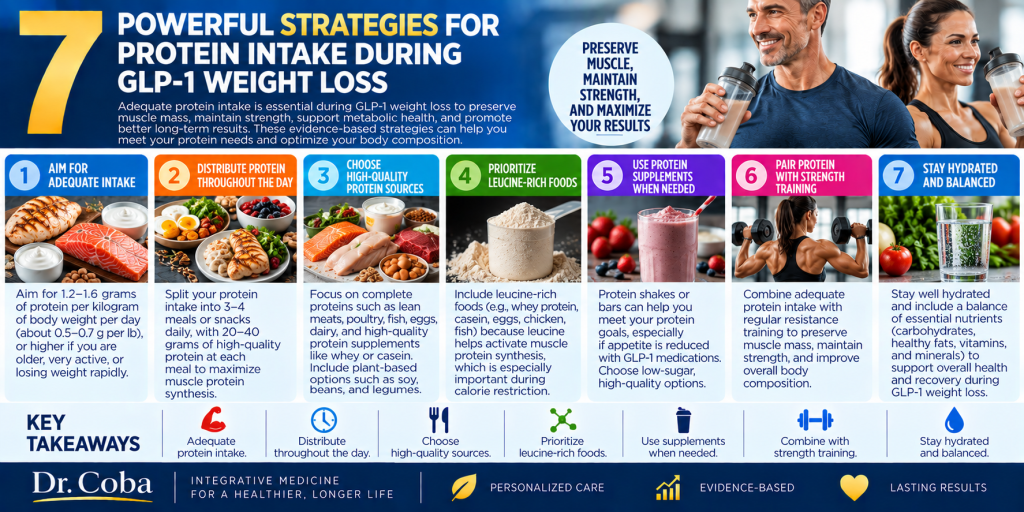
7 Powerful Protein Strategies During GLP-1 Weight Loss
1. Establish an Individualized Daily Protein Target
Establishing adequate protein intake during GLP-1 weight loss provides a practical foundation for preserving skeletal muscle during substantial weight reduction. However, the appropriate amount should be individualized rather than based on a single number for every patient.
For many generally healthy adults undergoing intentional weight loss, protein intake above the basic adult RDA of 0.8 g/kg/day may be useful, particularly when combined with resistance training. Older adults may also require greater attention to protein because aging can reduce the muscle protein synthetic response to dietary amino acids.
In clinical practice, protein targets are often considered within an approximate range of 1.0–1.6 g/kg/day, depending on age, activity level, degree of calorie restriction, resistance training, nutritional status, and the body-weight reference being used. Higher intake is not automatically better, and this range should not be applied indiscriminately.
For patients with obesity, calculating protein solely from current body weight can sometimes produce unnecessarily high targets. Depending on the individual, clinicians may instead consider ideal, adjusted, or target body weight together with estimated lean mass and overall nutritional requirements.
Kidney disease and certain other medical conditions require individualized assessment rather than automatically applying higher-protein targets.
Establishing an appropriate protein intake during GLP-1 weight loss gives the patient a measurable nutritional goal while allowing the prescription to be adjusted as body weight, body composition, appetite, physical activity, and clinical status change.
2. Distribute Protein Across Meals
Meeting an appropriate protein intake during GLP-1 weight loss target is important, but how that protein is distributed throughout the day may also influence muscle protein synthesis. Consuming nearly all daily protein at one meal can leave other meals with relatively little protein available to stimulate muscle tissue.
A more balanced approach distributes high-quality protein across breakfast, lunch, dinner, and—when needed—a strategically selected snack or protein supplement.
For many adults, approximately 25–40 grams of high-quality protein per meal can provide a practical starting range, although the optimal amount varies with body size, age, activity level, total daily protein requirements, and the protein source.
Older adults may particularly benefit from adequate protein at individual meals because aging is associated with anabolic resistance—the reduced muscle protein synthetic response to smaller amounts of dietary protein.
This becomes especially relevant when GLP-1 medications substantially suppress appetite. Smaller meals may need to be deliberately structured around protein-rich foods so that protein is not displaced by foods with lower nutritional value.
An effective protein intake during GLP-1 weight loss strategy therefore considers both the total daily amount and how that protein is distributed throughout the day.
3. Choose High-Quality, Nutrient-Dense Protein Sources
When appetite is substantially reduced, protein intake during GLP-1 weight loss becomes especially important because every meal represents an opportunity to support muscle while meeting essential nutritional needs. Patients may have fewer opportunities during the day to consume sufficient protein, vitamins, minerals, essential fatty acids, and other nutrients.
High-quality protein sources provide all essential amino acids in proportions that effectively support muscle protein synthesis. Examples include eggs, fish, poultry, lean meats, dairy products such as Greek yogurt and cottage cheese, and appropriately selected protein supplements.
Plant proteins can also contribute substantially to daily protein intake. Soy foods, legumes, lentils, beans, peas, nuts, seeds, and combinations of plant-based foods can help patients meet their nutritional goals. Depending on the protein source, larger portions or combinations of foods may sometimes be needed to provide comparable amounts of essential amino acids.
Protein quality should not be considered in isolation. Salmon, for example, provides protein together with omega-3 fatty acids, while dairy foods can provide calcium and other micronutrients. Legumes contribute protein along with fiber and minerals.
For patients with limited appetite, prioritizing nutrient-dense protein foods early in the meal may help prevent fullness from occurring before adequate protein has been consumed.
Choosing high-quality foods makes protein intake during GLP-1 weight loss more efficient while supporting overall nutrition, skeletal muscle, and metabolic health.
4. Combine Protein With Progressive Resistance Training
Protein intake during GLP-1 weight loss works together with resistance exercise to support skeletal muscle and preserve physical function. Dietary protein provides essential amino acids, while resistance training provides the mechanical stimulus that signals muscle tissue to adapt and maintain strength.
During weight loss, this combination becomes particularly important because an energy deficit can increase the risk of losing lean tissue. Adequate protein without an appropriate muscle-loading stimulus may not provide the same protection as protein combined with regular resistance exercise.
Resistance training can include free weights, machines, resistance bands, or appropriately selected body-weight exercises. The program should be individualized according to age, baseline strength, mobility, orthopedic limitations, cardiovascular status, and previous training experience.
Progressive overload is important. As strength improves, resistance, repetitions, training volume, or exercise difficulty should gradually increase so that skeletal muscle continues receiving an adequate stimulus.
Protein consumed around the training period can contribute to recovery and muscle protein synthesis, but achieving sufficient total daily protein remains more important than focusing exclusively on a narrow post-exercise timing window.
Combining resistance exercise with adequate protein intake during GLP-1 weight loss provides a practical foundation for reducing body fat while preserving strength, skeletal muscle, and physical function.
5. Use Protein Supplements Strategically When Appetite Is Low
Whole foods should provide much of the diet whenever practical, but maintaining adequate protein intake during GLP-1 weight loss can become difficult when significant appetite suppression makes it challenging for patients to meet their nutritional needs through meals alone.
A protein supplement can provide a convenient way to increase protein intake without requiring a large volume of food. Whey protein isolate, whey concentrate, casein, soy protein, and appropriately formulated plant-protein blends are common options.
Whey protein is particularly rich in essential amino acids and leucine, an amino acid involved in stimulating muscle protein synthesis. However, the best protein supplement depends on individual tolerance, dietary preferences, allergies, gastrointestinal symptoms, and overall nutritional needs.
Protein shakes can be especially useful when a patient consistently skips breakfast, struggles to finish meals, or needs additional protein around resistance-training sessions. They should complement rather than automatically replace nutrient-dense whole foods.
Calories from supplements should still be incorporated into the overall nutrition plan. Products containing large amounts of added sugar or unnecessary ingredients may provide calories without offering additional benefit.
Strategic supplementation can therefore make adequate protein intake during GLP-1 weight loss easier to achieve when reduced appetite makes conventional meals insufficient.
6. Protect Protein Intake When Nausea or Early Fullness Occurs
Nausea, early satiety, bloating, and other gastrointestinal symptoms can make adequate nutrition more difficult for some patients using GLP-1-based medications. When meal size decreases substantially, protein intake may unintentionally fall as well.
For patients struggling with protein intake during GLP-1 weight loss, smaller, more frequent meals can sometimes be easier to tolerate than large portions. Prioritizing the protein component of the meal before becoming overly full may also help patients reach their daily target.
Protein-rich foods with relatively small serving volumes—such as Greek yogurt, cottage cheese, eggs, fish, poultry, or a tolerated protein shake—can be useful when appetite is limited.
Hydration also deserves attention, particularly when nausea, vomiting, or reduced food and fluid intake occurs. Persistent gastrointestinal symptoms should not simply be accepted as a necessary part of treatment if they interfere with adequate nutrition or hydration.
Patients who repeatedly cannot meet nutritional requirements should have their medication tolerance, dose progression, dietary strategy, and overall treatment plan reassessed by the prescribing clinician.
Maintaining adequate protein intake during GLP-1 weight loss becomes especially important when gastrointestinal adverse effects reduce the quantity and variety of foods a patient can comfortably consume.
7. Monitor Muscle, Strength, and Nutrition as Weight Decreases
The effectiveness of a protein strategy cannot be evaluated by body weight alone. A patient may lose substantial weight while consuming insufficient protein and gradually losing strength or functional muscle.
Monitoring should therefore include more than pounds lost. Depending on the patient and available resources, clinicians may assess body composition, waist circumference, dietary intake, resistance-training performance, grip strength, chair-rise ability, walking performance, and other measures of physical function.
Protein requirements may also change during treatment. As body weight decreases, appetite changes, exercise increases, or the patient approaches a maintenance phase, the original nutritional prescription may need to be adjusted.
Older adults and patients with low baseline muscle mass deserve particular attention because clinically meaningful losses of muscle or strength may have greater consequences for mobility and independence.
Persistent weakness, declining exercise performance, difficulty performing normal activities, or inadequate nutritional intake should prompt reassessment rather than being viewed simply as an expected consequence of successful weight loss.
Monitoring protein intake during GLP-1 weight loss together with body composition, strength, and physical function helps ensure that treatment is improving the quality of weight loss—not merely the number displayed on the scale.
How Much Protein Do You Need During GLP-1 Weight Loss?
There is no single prescription for protein intake during GLP-1 weight loss that is appropriate for every patient using a GLP-1-based medication. The appropriate target depends on age, body composition, activity level, resistance training, calorie intake, kidney function, medical history, and the amount and rate of weight loss.
The adult Recommended Dietary Allowance for protein is 0.8 g/kg/day, but this represents a general minimum intended to meet the needs of most healthy adults rather than a specific muscle-preservation target during substantial weight reduction.
In many clinically appropriate patients undergoing intentional weight loss, particularly those performing resistance exercise or at increased risk of muscle loss, an individualized intake in the approximate range of 1.0–1.6 g/kg/day may be considered. The appropriate point within that range varies considerably between individuals.
For patients with obesity, simply multiplying current body weight by a high protein target can produce unnecessarily large amounts. Depending on the clinical situation, protein requirements may instead be estimated using target body weight, adjusted body weight, lean mass, or another individualized approach.
Older adults may require particular attention to both total protein intake and protein distribution because aging can reduce the muscle protein synthetic response to smaller protein doses.
Patients with chronic kidney disease or other conditions affecting protein requirements should receive an individualized recommendation from their treating clinician rather than automatically following a high-protein diet.
The appropriate protein intake during GLP-1 weight loss should therefore be viewed as a personalized prescription that can be reassessed as weight, body composition, activity, and clinical status change.
Does Protein Quality and Leucine Matter?
Total daily protein intake remains the foundation of a muscle-preservation strategy, but protein quality can also influence the muscle protein synthetic response.
Leucine is an essential amino acid that acts as an important nutritional signal involved in initiating muscle protein synthesis. High-quality proteins such as whey, dairy products, eggs, fish, poultry, and meat generally provide substantial amounts of leucine together with the other essential amino acids required to build muscle protein.
For many adults, a meal containing roughly 25–40 grams of high-quality protein will also provide a meaningful amount of leucine, although the exact amount varies according to the protein source and serving size.
Older adults may require a stronger amino-acid stimulus at individual meals because of age-related anabolic resistance. This makes both protein quantity and quality particularly relevant when appetite and total calorie intake are reduced.
Plant-based diets can also provide adequate protein, but attention may be needed to total protein quantity, essential amino-acid composition, food combinations, and portion size. Soy and appropriately formulated plant-protein blends can be useful options.
Leucine should not be viewed as a substitute for adequate total protein, resistance exercise, or overall nutrition. Instead, it is one component of a broader strategy designed to provide skeletal muscle with both the amino acids and mechanical stimulus required for maintenance and adaptation.
Optimizing protein quality can therefore strengthen a patient’s protein intake during GLP-1 weight loss while supporting muscle preservation, recovery, and physical function.
Why Older Adults Need Special Attention During GLP-1 Weight Loss
Older adults may enter medical weight-loss treatment with less skeletal muscle and strength than younger patients. Age-related anabolic resistance can also reduce the muscle protein synthetic response to smaller amounts of dietary protein.
When GLP-1-based medications substantially reduce appetite, these factors can converge. Lower calorie intake may lead to inadequate protein consumption at precisely the time when maintaining skeletal muscle becomes increasingly important.
Preserving muscle in older adults is not simply a body-composition goal. Skeletal muscle contributes to strength, balance, glucose disposal, mobility, recovery from illness, and the ability to remain physically independent.
Protein intake should therefore be considered together with progressive resistance exercise whenever clinically appropriate. Monitoring strength and physical performance can also help identify changes that may not be apparent from body weight alone.
Particular attention may be warranted in older patients who already have low muscle mass, frailty, limited mobility, recurrent falls, poor nutritional intake, or substantial recent weight loss.
For these patients, appropriate protein intake during GLP-1 weight loss should support a broader objective: reducing excess adiposity while preserving the muscle, strength, and physical capacity required for healthy aging and independence.
The Bottom Line on Protein Intake During GLP-1 Weight Loss
GLP-1-based medications can substantially reduce appetite and body weight, but successful medical weight management should focus on the quality of weight loss as well as the number of pounds lost.
Adequate protein helps provide the amino acids needed to support skeletal muscle, particularly when calorie intake is reduced. However, protein works best as part of a comprehensive strategy that also includes progressive resistance training, nutrient-dense foods, adequate hydration, appropriate calorie intake, and sufficient recovery.
Protein requirements should be individualized rather than determined by a universal formula. Age, body composition, kidney function, activity level, resistance training, nutritional status, and the rate of weight reduction all influence the appropriate target.
Protein distribution and quality also matter. Providing meaningful amounts of high-quality protein across several meals can help support repeated stimulation of muscle protein synthesis, while supplements may be useful when appetite suppression makes adequate food intake difficult.
Older adults and patients who already have low muscle mass or strength deserve particular attention because preserving skeletal muscle is essential for mobility, metabolic health, and long-term independence.
Ultimately, optimizing protein intake during GLP-1 weight loss means reducing excess body fat while providing the nutritional and exercise support necessary to preserve muscle, strength, and physical function.
Pingback: Resistance Training During GLP-1 Weight Loss: 7 Proven Tips
Pingback: GLP-1 Muscle Loss: 7 Powerful Ways to Preserve Muscle During Weight Loss - Dr. Coba Clinic