
Why Hydration Matters During GLP-1 Weight Loss
GLP-1-based medications such as semaglutide and tirzepatide can substantially reduce appetite and food intake. Although these effects can support meaningful weight reduction, patients may also consume less fluid simply because they are eating and drinking less throughout the day.
Gastrointestinal adverse effects can further increase the risk of inadequate hydration. Nausea, vomiting, diarrhea, constipation, and early satiety may make maintaining normal fluid intake more difficult, particularly during dose escalation or periods of gastrointestinal intolerance.
Hydration during GLP-1 weight loss therefore deserves deliberate attention. Water is essential for maintaining blood volume, temperature regulation, gastrointestinal function, kidney function, and normal cellular processes.
Dehydration can present with thirst, dry mouth, darker or reduced urine, headache, fatigue, dizziness, or lightheadedness. More substantial fluid depletion can contribute to hypotension, electrolyte disturbances, impaired kidney function, and reduced physical performance.
Hydration is also relevant to the muscle-preservation strategy we have been developing. Resistance exercise increases fluid requirements, while adequate hydration supports exercise performance, circulation, thermoregulation, and recovery.
However, there is no single fluid prescription appropriate for every patient. Requirements vary according to body size, diet, physical activity, climate, kidney and cardiovascular function, medications, and fluid losses.
The objective of hydration during GLP-1 weight loss is therefore not simply to drink the largest possible quantity of water. Instead, patients should maintain sufficient fluid and electrolyte balance while accounting for their individual medical circumstances and symptoms.
7 Important Hydration Strategies During GLP-1 Weight Loss
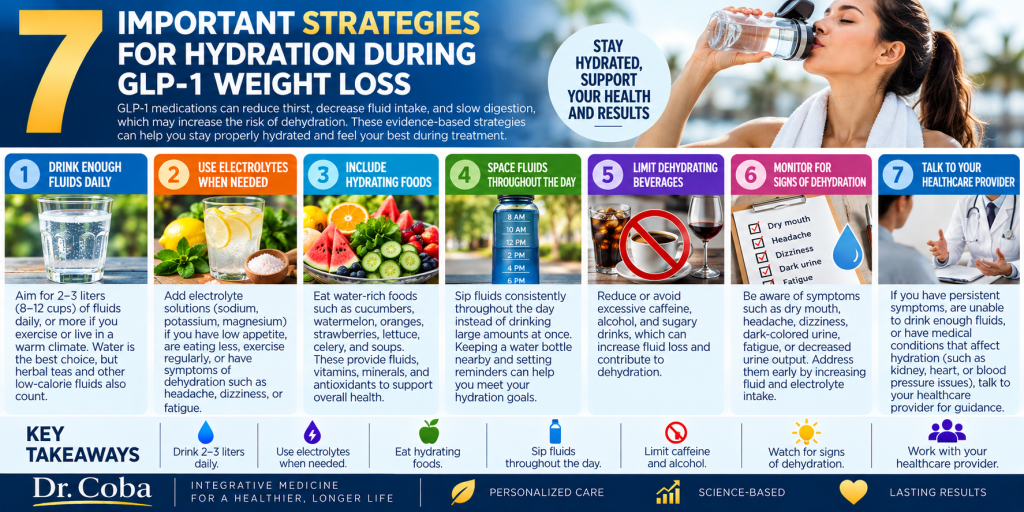
1. Drink Fluids Consistently Throughout the Day
Maintaining hydration during GLP-1 weight loss should not rely entirely on thirst, particularly when appetite, eating patterns, and normal drinking cues have changed. Reduced appetite, early satiety, nausea, or changes in normal eating patterns can also reduce the usual behavioral cues that remind patients to drink.
Instead of attempting to consume large amounts of water at once, many patients may find it easier to drink smaller quantities regularly throughout the day. This approach can be particularly useful when gastric fullness or nausea makes larger volumes uncomfortable.
Keeping water readily available can make consistent intake easier. Drinking with medications, between meals, around exercise sessions, and at other predictable times can help establish a practical routine.
Urine characteristics can provide a simple, although imperfect, indication of hydration. Persistently dark urine or markedly reduced urine output may suggest inadequate fluid intake or increased fluid losses and should be considered alongside symptoms and medical circumstances.
Patients should not force excessive amounts of water simply to meet an arbitrary target. Excessive water consumption can also be harmful, particularly in people with certain kidney, heart, or electrolyte disorders.
For most appropriately selected patients, hydration during GLP-1 weight loss is better approached through consistent fluid intake distributed across the day rather than consuming very large quantities at infrequent intervals.
2. Increase Attention to Fluids When Gastrointestinal Symptoms Occur
Hydration during GLP-1 weight loss requires additional attention when nausea, vomiting, or diarrhea occurs because these gastrointestinal effects can reduce fluid intake or increase fluid losses. When these symptoms are significant, fluid losses or reduced fluid intake can increase the risk of dehydration.
Vomiting and diarrhea can cause losses of both water and electrolytes. At the same time, nausea and early satiety may make replacing those losses more difficult because patients may tolerate only small amounts of fluid at a time.
When gastrointestinal symptoms are mild, taking frequent small sips may be easier to tolerate than drinking a large glass of water at once. Patients can gradually increase intake as symptoms improve.
Persistent vomiting or diarrhea deserves greater attention. In these circumstances, simply drinking plain water may not always address substantial electrolyte losses, and individualized medical guidance may be appropriate.
Patients should also recognize warning signs such as markedly reduced urination, persistent dizziness, inability to keep fluids down, confusion, fainting, or progressive weakness. These symptoms warrant prompt medical assessment rather than continued attempts to manage dehydration independently.
Maintaining hydration during GLP-1 weight loss becomes especially important during episodes of gastrointestinal intolerance because both reduced intake and increased fluid losses can occur simultaneously.
3. Replace Electrolytes When Fluid Losses Are Significant
Water is the primary component of hydration, but normal fluid balance also depends on electrolytes such as sodium and potassium. These minerals help regulate fluid distribution, nerve signaling, muscle contraction, and other physiological processes.
Routine electrolyte supplementation is not necessary for every person taking a GLP-1 medication. For many patients eating a balanced diet and maintaining normal fluid intake, food and beverages provide sufficient electrolytes.
The situation can change when vomiting, diarrhea, prolonged sweating, or substantially reduced food intake occurs. Under these circumstances, losses of water and electrolytes may occur together.
An oral rehydration solution or appropriately formulated electrolyte beverage may sometimes be useful when meaningful gastrointestinal or exercise-related fluid losses occur. Products containing large amounts of added sugar are not automatically necessary simply because they are marketed for hydration.
Electrolyte replacement should also be individualized. Patients with kidney disease, heart failure, hypertension, or medications that alter sodium or potassium balance may require specific guidance before substantially increasing electrolyte intake.
For this reason, hydration during GLP-1 weight loss should account for both water and electrolyte losses when clinically relevant rather than assuming that every episode of dehydration can be corrected with plain water alone.
4. Monitor Urine Output and Other Signs of Dehydration
Hydration during GLP-1 weight loss cannot be assessed perfectly from a single symptom, but several practical signs can help patients recognize when fluid intake may be inadequate.
Urine output is particularly useful to monitor. A noticeable reduction in urination or urine that remains unusually dark and concentrated can occur when the body is conserving water.
Other possible symptoms include increased thirst, dry mouth, headache, fatigue, dizziness, lightheadedness, weakness, and reduced exercise tolerance. These findings are not specific to dehydration, so persistent or significant symptoms should not automatically be attributed to insufficient water intake.
Body weight can also fluctuate with changes in fluid balance. A rapid change over a short period may reflect fluid shifts rather than changes in body fat, particularly when vomiting, diarrhea, heavy sweating, or substantially reduced intake is present.
Patients experiencing dizziness when standing should be particularly cautious. Fluid depletion can contribute to orthostatic symptoms, although medications, blood pressure changes, and other medical conditions can produce similar symptoms.
Severe or progressive symptoms—including confusion, fainting, inability to maintain oral fluids, or markedly reduced urine output—require prompt medical evaluation.
Monitoring these practical indicators makes hydration during GLP-1 weight loss more individualized than simply prescribing the same number of ounces of water to every patient.
5. Adjust Fluid Intake Around Exercise and Hot Weather
Physical activity increases fluid requirements because exercise generates heat and can produce substantial water loss through sweating. Hot and humid environments can increase these losses further.
Patients performing resistance training or cardiovascular exercise during GLP-1 therapy should pay attention to fluid intake before, during, and after activity. The amount required varies considerably according to exercise duration, intensity, environmental temperature, body size, clothing, and individual sweating rate.
For shorter or less intense exercise sessions, water may be sufficient for many people. Longer sessions, heavy sweating, or exercise in hot conditions may produce more substantial electrolyte losses and require a different replacement strategy.
Patients should avoid beginning demanding exercise already dehydrated. Dizziness, unusual fatigue, headache, reduced performance, excessive thirst, or very dark urine can indicate that hydration deserves attention before additional strenuous activity.
At the same time, drinking excessive amounts of plain water during prolonged exercise can be problematic because it may dilute blood sodium concentrations. Fluid replacement should therefore correspond reasonably to actual losses rather than following a “more is always better” approach.
Maintaining hydration during GLP-1 weight loss around exercise can support circulation, temperature regulation, muscular performance, and recovery while reducing the likelihood that preventable fluid depletion interferes with an otherwise effective training program.
6. Use Food as Part of Your Hydration Strategy
Hydration during GLP-1 weight loss does not depend exclusively on beverages because water-rich foods can also contribute meaningfully to daily fluid intake. Many foods contain substantial amounts of water and can contribute meaningfully to overall fluid intake.
Fruits and vegetables such as watermelon, oranges, berries, cucumbers, tomatoes, zucchini, and leafy greens provide water along with vitamins, minerals, fiber, and other nutrients. Soups, yogurt, and other high-moisture foods can also contribute to fluid intake.
This can be useful during GLP-1 therapy because patients may be consuming smaller portions. Choosing nutrient-dense foods with a relatively high water content can support both hydration and nutritional quality without requiring all fluid needs to come from plain water.
However, food should not be expected to compensate for significant fluid losses from persistent vomiting, diarrhea, heavy sweating, or inadequate beverage intake. In those circumstances, more deliberate fluid replacement may be necessary.
Patients experiencing early satiety may also find that drinking very large amounts immediately before meals makes it more difficult to consume adequate protein and other essential nutrients. Spacing fluids appropriately can help balance hydration with nutritional intake.
A comprehensive approach to hydration during GLP-1 weight loss therefore includes both beverages and water-rich foods while preserving adequate protein and overall nutrient intake.
7. Know When Dehydration Requires Medical Attention
Maintaining hydration during GLP-1 weight loss becomes especially important when mild dehydration develops, because early fluid replacement may help when the underlying cause is temporary and resolves. However, persistent or severe fluid loss can become clinically significant and should not simply be managed by repeatedly drinking more water at home.
Patients should seek medical guidance when vomiting or diarrhea persists, oral fluids cannot be maintained, or symptoms continue despite reasonable attempts at rehydration.
Warning signs can include markedly reduced urine output, fainting, confusion, severe or persistent dizziness, rapid heartbeat, progressive weakness, or symptoms suggesting significant electrolyte disturbance.
Older adults and patients with kidney disease, cardiovascular disease, diabetes, low blood pressure, or medications that influence blood pressure, kidney function, or fluid and electrolyte balance may require earlier assessment.
Persistent gastrointestinal symptoms during GLP-1 therapy may also require evaluation of medication dose, dose escalation, nutritional intake, and other possible causes rather than treating dehydration as an isolated problem.
The objective is to identify clinically important fluid depletion before complications develop. Severe dehydration can impair kidney perfusion and may contribute to acute kidney injury, particularly when vomiting or diarrhea prevents adequate fluid replacement.
Safe hydration during GLP-1 weight loss therefore includes recognizing when routine self-management is no longer sufficient and timely medical evaluation is appropriate.
How Much Water Should You Drink During GLP-1 Weight Loss?
There is no single daily water prescription for hydration during GLP-1 weight loss because individual fluid requirements vary considerably. Fluid requirements vary according to body size, age, diet, physical activity, environmental temperature, sweating, gastrointestinal losses, pregnancy status, medications, and kidney or cardiovascular function.
For generally healthy adults, established dietary reference values describe total daily water intake from both beverages and food, rather than prescribing an identical amount of plain water for everyone. Water contained in foods can contribute meaningfully to this total.
For practical purposes, patients can distribute fluids throughout the day and adjust intake according to thirst, urine output, activity, climate, and gastrointestinal symptoms. Exercise, hot weather, fever, vomiting, or diarrhea can increase fluid requirements.
Conversely, some patients should not automatically increase fluid intake aggressively. Heart failure, advanced kidney disease, certain electrolyte disorders, and medications affecting fluid balance may require individualized fluid recommendations.
Urine color can provide a rough practical clue, but it should not be treated as a precise diagnostic test. Pale-yellow urine is commonly compatible with adequate hydration, whereas persistently dark urine accompanied by reduced urine output or symptoms such as dizziness may indicate that additional assessment is warranted.
Patients experiencing substantial nausea or early satiety may tolerate smaller, more frequent amounts of fluid better than large volumes consumed at once. This approach may also reduce the likelihood that beverages interfere with adequate protein and nutrient intake at meals.
The most appropriate approach to hydration during GLP-1 weight loss is therefore individualized: maintain regular fluid intake, replace additional losses when they occur, and modify the plan when medical conditions or symptoms require more specific guidance.
The Bottom Line on Hydration During GLP-1 Weight Loss
GLP-1-based medications can substantially reduce appetite and food intake, but those same effects may also change normal drinking patterns. Gastrointestinal symptoms such as nausea, vomiting, and diarrhea can further increase the risk of inadequate fluid intake or excessive fluid losses.
Maintaining appropriate hydration supports circulation, kidney function, gastrointestinal function, temperature regulation, exercise performance, and normal cellular processes. It is therefore an important component of a comprehensive medical weight-management program.
The solution is not simply to drink as much water as possible. Fluid requirements vary among individuals, and excessive water intake can also create problems. Patients should consider thirst, urine output, physical activity, climate, gastrointestinal symptoms, diet, medications, and relevant medical conditions.
Electrolyte replacement may be appropriate when meaningful fluid and electrolyte losses occur, but routine supplementation is not necessary for everyone. Patients with kidney disease, cardiovascular disease, or medications affecting electrolyte balance may require individualized recommendations.
Warning signs such as persistent vomiting or diarrhea, inability to keep fluids down, markedly reduced urination, fainting, confusion, severe dizziness, or progressive weakness should prompt medical assessment rather than continued self-treatment.
Ultimately, successful hydration during GLP-1 weight loss means maintaining adequate fluid and electrolyte balance while supporting nutrition, resistance training, muscle preservation, and overall health throughout the weight-loss process.
Pingback: Constipation During GLP-1 Weight Loss: 7 Effective Tips
Pingback: Nausea During GLP-1 Weight Loss: 7 Effective Strategies for Relief - Dr. Coba Clinic