
Why Constipation Can Occur During GLP-1 Weight Loss
GLP-1-based medications such as semaglutide and tirzepatide can be highly effective for weight management, but gastrointestinal adverse effects are common. Constipation is one of the symptoms some patients experience during treatment.
Several factors may contribute. GLP-1 therapies affect gastrointestinal function and can slow gastric emptying, while reduced appetite often leads to substantially smaller meals. When patients eat less food, they may also consume less fiber, fluid, and total stool-forming material.
Changes in hydration can further influence bowel function. Nausea, early satiety, or simply drinking less because overall intake has decreased may result in harder stools that are more difficult to pass.
Constipation during GLP-1 weight loss may also be influenced by reduced physical activity, dietary changes, other medications or supplements, and preexisting bowel habits. The cause is therefore not necessarily the GLP-1 medication alone.
Constipation generally refers to more than simply having fewer bowel movements. Patients may experience hard or lumpy stools, excessive straining, a sensation of incomplete evacuation, difficulty passing stool, or fewer than three spontaneous bowel movements per week.
Management should focus on restoring comfortable bowel function without automatically relying on aggressive laxative use. Adequate fluid intake, appropriate dietary fiber, regular physical activity, and individualized bowel habits can all play important roles.
However, persistent or severe symptoms deserve clinical attention. Significant abdominal pain, progressive abdominal distention, repeated vomiting, inability to pass stool or gas, gastrointestinal bleeding, or an abrupt major change in bowel function should not be treated as routine constipation.
The goal in managing constipation during GLP-1 weight loss is therefore to support normal bowel function while identifying symptoms that may require medication adjustment or further medical evaluation.
7 Effective Strategies for Constipation During GLP-1 Weight Loss
1. Maintain Adequate Hydration
Adequate fluid intake is one of the foundational components of normal bowel function. Water helps maintain stool moisture and can make stool easier to pass through the colon.
During GLP-1 therapy, patients may unintentionally drink less because their appetite, meal size, and normal eating routines have changed. Nausea and early satiety can make larger volumes of fluid particularly uncomfortable.
Rather than consuming large amounts at once, smaller amounts distributed throughout the day may be easier to tolerate. Fluid requirements vary according to body size, activity, climate, diet, medications, kidney function, cardiovascular status, and gastrointestinal losses.
Increasing fiber without adequate fluid can sometimes worsen bloating or stool difficulty, particularly when fiber intake is increased rapidly. Hydration and fiber therefore need to be considered together rather than as completely separate interventions.
Persistently dark urine, reduced urine output, dry mouth, or dizziness may suggest inadequate fluid intake, although these findings are not specific to dehydration and should be interpreted within the patient’s overall clinical circumstances.
For many patients, improving hydration is an important first step in managing constipation during GLP-1 weight loss, particularly when reduced food and fluid intake have occurred together.
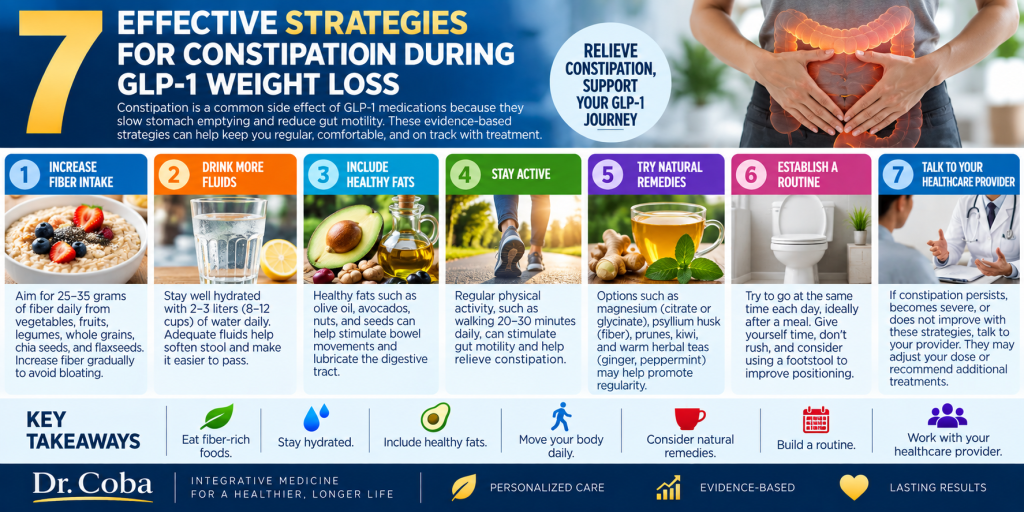
2. Increase Fiber Gradually
Managing constipation during GLP-1 weight loss often includes adequate dietary fiber because fiber can increase stool bulk, retain water, and influence intestinal transit. However, rapidly increasing fiber intake can produce bloating, abdominal discomfort, and gas, particularly in patients already experiencing gastrointestinal symptoms.
Patients using GLP-1 medications may be eating considerably smaller portions than before treatment. As total food intake falls, fiber intake can decline unintentionally unless nutrient-dense, fiber-containing foods remain part of the diet.
Vegetables, fruits, legumes, whole grains, nuts, and seeds can provide fiber along with vitamins, minerals, and other beneficial nutrients. Food sources are generally a practical starting point when they are well tolerated.
Soluble fiber sources may be particularly useful for some patients because they absorb water and form a gel-like material that can help normalize stool consistency. Psyllium is one commonly used example, although tolerance and appropriate dosing should be individualized.
Fiber should generally be increased progressively rather than dramatically. Adequate fluid intake becomes particularly important as fiber increases because adding substantial fiber without sufficient fluid may worsen stool difficulty in susceptible individuals.
For patients with significant abdominal pain, vomiting, marked distention, or concern for intestinal obstruction, simply adding more fiber is not appropriate until the underlying problem has been evaluated.
A gradual, individualized increase in dietary fiber can therefore be an important component of managing constipation during GLP-1 weight loss while minimizing unnecessary gastrointestinal discomfort.
3. Stay Physically Active
Managing constipation during GLP-1 weight loss can include regular physical activity because movement may support gastrointestinal motility and promote more consistent bowel habits. This becomes especially relevant during weight loss because some patients become less active when experiencing nausea, fatigue, or reduced caloric intake.
Walking is a practical starting point for many patients. Even relatively brief periods of movement throughout the day can reduce prolonged sedentary time while supporting overall metabolic and cardiovascular health.
Resistance training is also valuable during GLP-1 therapy because it helps preserve skeletal muscle while body weight decreases. Although its primary purpose is not constipation treatment, maintaining an active lifestyle can complement other strategies intended to support bowel regularity.
Exercise should be individualized according to age, physical condition, cardiovascular status, orthopedic limitations, and previous activity level. Patients who have been sedentary should generally progress gradually rather than abruptly beginning strenuous exercise.
Hydration deserves additional attention around exercise, particularly in hot environments or when sweating is substantial. Increasing activity while remaining inadequately hydrated may counteract efforts to improve stool consistency.
For appropriately selected patients, regular movement can therefore complement hydration and dietary fiber as part of a broader strategy for managing constipation during GLP-1 weight loss.
4. Establish a Consistent Bowel Routine
Managing constipation during GLP-1 weight loss involves more than diet and hydration because establishing a consistent bowel routine can also support regular evacuation. Ignoring the natural urge to defecate repeatedly can allow stool to remain in the colon longer, where additional water may be absorbed and stool can become harder.
Patients should try to respond to the urge to have a bowel movement rather than routinely postponing it. Establishing a predictable time for toileting can also help reinforce a consistent bowel pattern.
The gastrocolic reflex, which stimulates colonic activity after eating, can make the period following a meal a useful time to attempt a bowel movement. Breakfast may be particularly practical for patients whose schedule allows adequate time without rushing.
Proper positioning can also make evacuation easier. Placing the feet on a small stool so that the knees are elevated above the hips may improve anorectal positioning and reduce the amount of straining required.
Prolonged sitting and excessive straining should be avoided. Spending extended periods on the toilet can increase pressure in the anorectal region and may contribute to hemorrhoidal symptoms without necessarily improving evacuation.
A regular, unhurried bowel routine can therefore complement hydration, fiber, and physical activity when managing constipation during GLP-1 weight loss.
5. Consider Osmotic Laxatives When Lifestyle Measures Are Not Enough
Initial management of constipation during GLP-1 weight loss commonly includes hydration, dietary fiber, physical activity, and regular bowel habits, but these measures may not provide sufficient relief for every patient.
Osmotic laxatives work by retaining water within the intestinal lumen, which can soften stool and facilitate bowel movements. Polyethylene glycol, commonly abbreviated PEG, is one frequently used osmotic laxative for constipation.
Unlike stimulant laxatives, PEG does not primarily work by directly stimulating intestinal contractions. Its osmotic action increases the amount of water retained in stool, helping improve stool consistency and ease of passage.
The appropriate approach depends on symptom severity, duration, medical history, and other medications. Patients should follow product directions or individualized clinical recommendations rather than assuming that progressively larger doses will produce better results.
Magnesium-containing laxatives can also have osmotic effects, but they require greater caution in patients with impaired kidney function because magnesium accumulation can occur when renal clearance is reduced.
Persistent constipation despite appropriate conservative measures should prompt reassessment rather than indefinite self-treatment. Medication dose, dietary intake, hydration, other constipating medications, and underlying gastrointestinal disorders may need to be considered.
For some patients, an appropriately selected osmotic agent can therefore become part of the management of constipation during GLP-1 weight loss when foundational lifestyle measures alone are insufficient.
6. Review Medications and Supplements That May Worsen Constipation
Constipation during GLP-1 therapy may have more than one cause. Before assuming that the GLP-1 medication is solely responsible, it is useful to review other medications and supplements that can slow bowel function or make stools more difficult to pass.
Certain medications are well known to contribute to constipation. Examples can include opioid pain medications, some anticholinergic drugs, certain antidepressants, iron supplements, calcium-containing products, and some medications used for blood pressure or other medical conditions.
Supplements should also be reviewed. Iron and calcium are common examples, but individual responses vary considerably depending on the formulation, dose, diet, hydration, and baseline bowel habits.
Patients should not discontinue prescribed medications simply because constipation develops. Instead, the complete medication and supplement list can be reviewed to determine whether an alternative medication, dose adjustment, formulation change, or bowel-management strategy is appropriate.
Timing can also be informative. Constipation that begins shortly after starting a new medication, increasing a dose, or adding a supplement may provide an important clue about contributing factors.
A comprehensive medication review can therefore improve management of constipation during GLP-1 weight loss by identifying potentially reversible contributors rather than treating every case as an unavoidable effect of GLP-1 therapy.
7. Recognize When Constipation Needs Medical Evaluation
Most uncomplicated constipation can initially be managed with adjustments to hydration, dietary fiber, physical activity, bowel habits, and, when appropriate, medications used for constipation. However, persistent or severe symptoms should not automatically be attributed to GLP-1 therapy.
New or worsening abdominal pain, progressive abdominal distention, repeated vomiting, gastrointestinal bleeding, fever, or inability to pass stool or gas can indicate a more significant gastrointestinal problem and warrant prompt medical evaluation.
A sudden major change in bowel habits also deserves attention, particularly when symptoms are persistent or accompanied by unexplained weight loss beyond what would be expected from treatment, anemia, rectal bleeding, or other concerning findings.
Patients experiencing prolonged constipation despite reasonable interventions may need reassessment of their GLP-1 dose, dose-escalation schedule, fluid and food intake, other medications, and underlying gastrointestinal conditions.
Severe constipation can occasionally progress to fecal impaction, particularly in older adults, patients with limited mobility, or individuals taking other constipating medications. Increasing fiber alone may not be appropriate when impaction or obstruction is suspected.
Effective management of constipation during GLP-1 weight loss therefore includes recognizing the point at which routine self-care is no longer sufficient and further clinical evaluation is warranted.
What Is a Healthy Bowel Movement Frequency During GLP-1 Weight Loss?
Normal bowel frequency varies considerably among individuals. Some healthy adults have bowel movements more than once per day, while others normally have them only several times per week.
For this reason, constipation should not be defined solely by the number of bowel movements. Stool consistency, ease of passage, straining, discomfort, and the sensation of complete evacuation are also important.
A patient who has a bowel movement every day but consistently passes hard stools with substantial straining may still have constipation. Conversely, a patient who comfortably passes soft, formed stool every other day without straining may simply have a normal individual pattern.
The Bristol Stool Form Scale is one practical way to describe stool consistency. Hard, separate pellets or very lumpy stools are generally associated with slower intestinal transit, whereas soft, formed stools that are easy to pass are usually more desirable.
During GLP-1 therapy, bowel frequency may change because patients are consuming smaller quantities of food. Less food entering the gastrointestinal tract can mean less stool volume, so a modest reduction in frequency does not necessarily indicate a medical problem.
The more useful objective is comfortable, predictable evacuation without excessive straining, persistent abdominal discomfort, or a continuing sensation that stool remains after the bowel movement.
Monitoring these features provides a more clinically meaningful way to evaluate constipation during GLP-1 weight loss than focusing exclusively on whether a bowel movement occurs every day.
The Bottom Line on Constipation During GLP-1 Weight Loss
Constipation can occur during treatment with GLP-1-based medications, particularly when reduced appetite leads to smaller meals, lower fiber intake, less fluid consumption, or changes in normal bowel habits.
Management should begin by considering the entire clinical picture rather than assuming that medication is the only cause. Hydration, gradually increasing dietary fiber, regular physical activity, and consistent bowel habits provide a practical foundation for many patients.
When these measures are insufficient, appropriately selected treatments such as an osmotic laxative may be useful. Medication and supplement lists should also be reviewed because other agents may contribute to constipation.
The objective is not necessarily to produce a bowel movement every day. Comfortable passage of soft, formed stool without excessive straining, persistent discomfort, or a sensation of incomplete evacuation is generally more meaningful than frequency alone.
Patients should avoid prolonged sitting and repeated forceful straining during bowel movements. These behaviors do not necessarily improve evacuation and may contribute to anorectal problems such as hemorrhoidal symptoms.
Persistent constipation, significant abdominal pain, progressive distention, repeated vomiting, gastrointestinal bleeding, or inability to pass stool or gas requires further evaluation rather than continued self-treatment.
Ultimately, managing constipation during GLP-1 weight loss requires an individualized approach that supports bowel regularity while identifying medication effects, dietary factors, hydration problems, and symptoms that warrant medical assessment.