
Why Nausea Can Occur During GLP-1 Weight Loss
GLP-1-based medications such as semaglutide and tirzepatide can be highly effective for weight management, but gastrointestinal symptoms are among their most commonly reported adverse effects. Nausea is particularly common during treatment initiation and after dose increases.
GLP-1 receptor agonists influence several processes involved in appetite and digestion. They enhance satiety, reduce hunger, and can slow gastric emptying. As a result, patients may feel full after considerably smaller meals than they were accustomed to eating before treatment.
Eating beyond this new level of satiety can intensify fullness, bloating, reflux, and nausea. Large meals, high-fat foods, rapid eating, and excessive alcohol intake may also aggravate gastrointestinal symptoms in susceptible individuals.
Nausea during GLP-1 weight loss can also reduce fluid and nutrient intake. When nausea causes patients to drink less or repeatedly skip meals, dehydration, fatigue, dizziness, and inadequate protein intake may become additional concerns.
Symptoms are often most noticeable when treatment begins or when the medication dose is increased. For many patients, gastrointestinal tolerance improves over time, although the pattern and severity vary considerably between individuals.
Management should focus on maintaining adequate nutrition and hydration while reducing behaviors that worsen symptoms. Smaller meals, slower eating, appropriate food selection, and attention to fluid intake can be useful practical measures.
Persistent or severe nausea should not automatically be considered a normal part of treatment. Repeated vomiting, inability to maintain hydration, severe or persistent abdominal pain, progressive abdominal distention, or other concerning symptoms warrant medical evaluation.
The goal in managing nausea during GLP-1 weight loss is therefore not simply to suppress the symptom, but to preserve hydration and nutritional intake while determining whether medication dosing, eating patterns, or another clinical problem requires attention.
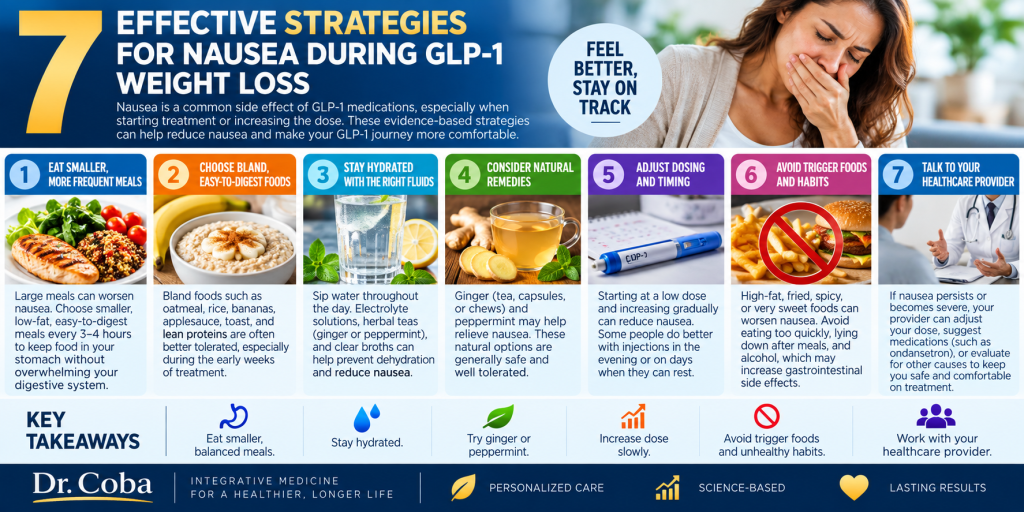
7 Effective Strategies for Nausea During GLP-1 Weight Loss
1. Eat Smaller Meals
Reduced appetite and earlier satiety are expected effects of GLP-1-based medications. Continuing to eat portions similar to those consumed before treatment may therefore produce uncomfortable fullness and worsen gastrointestinal symptoms.
Smaller meals place less volume in the stomach at one time and may be easier to tolerate, particularly when gastric emptying is slowed. Some patients may find several modest meals or snacks more comfortable than two or three large meals.
Patients should pay attention to early satiety rather than attempting to finish a predetermined portion simply because food remains on the plate. Stopping when comfortably satisfied can help prevent excessive gastric fullness.
Eating slowly can also be useful. A slower pace provides more time to recognize satiety signals before excessive food has been consumed and may reduce the tendency to overeat.
Meal size should not become so small that adequate nutrition is consistently sacrificed. Protein and other nutrient-dense foods remain important during weight loss, particularly for preserving lean body mass.
For many patients, adjusting portion size is one of the simplest first steps for reducing nausea during GLP-1 weight loss while maintaining adequate nutritional intake.
2. Limit High-Fat and Heavy Meals
High-fat and heavy meals may aggravate early satiety and prolonged fullness, so limiting them can help reduce nausea during GLP-1 weight loss in susceptible patients.
Dietary fat is an important nutrient and does not need to be eliminated. However, very large portions of fried foods, greasy meals, rich sauces, fatty meats, or other calorie-dense foods may intensify fullness and gastrointestinal discomfort in susceptible patients.
Cooking methods can make a meaningful difference. Grilling, baking, steaming, roasting, or air-frying foods with modest amounts of added fat may be better tolerated than heavily fried preparations.
Patients can also observe whether particular foods repeatedly trigger symptoms. Individual tolerance varies, so unnecessarily restrictive diets should be avoided when a specific food does not cause problems.
Meals should still provide adequate protein and essential nutrients. Lean protein sources such as fish, poultry, eggs, Greek yogurt, cottage cheese, or other well-tolerated foods can help maintain protein intake without requiring very large portions.
Reducing particularly heavy meals while maintaining a balanced diet can therefore help some patients manage nausea during GLP-1 weight loss without unnecessarily eliminating nutritious foods.
3. Eat Slowly and Stop at the First Sign of Fullness
Because GLP-1 medications can substantially change how quickly patients feel satisfied during a meal, recognizing new satiety signals is important for reducing nausea during GLP-1 weight loss. Someone who previously required a larger portion to feel full may now reach comfortable satiety after considerably less food.
Eating rapidly can make it easier to consume more food than the stomach comfortably tolerates before these satiety signals are fully recognized. This may contribute to excessive fullness, bloating, belching, reflux, and nausea.
Patients can deliberately slow the pace of eating by taking smaller bites, chewing thoroughly, and allowing brief pauses during the meal. These simple behaviors provide additional time to recognize increasing fullness.
The first clear sensation of comfortable fullness should generally be treated as a signal to stop eating rather than as a reason to continue until the plate is empty. Food can be saved for later if additional nutrition is needed.
This approach is particularly useful after a GLP-1 dose increase, when the degree of appetite suppression and early satiety may temporarily become more pronounced.
Patients should still ensure that smaller meals collectively provide adequate protein, micronutrients, and energy appropriate to their clinical goals.
Learning to recognize and respond to new satiety signals can therefore be an important strategy for reducing nausea during GLP-1 weight loss without unnecessarily restricting nutritional intake.
4. Maintain Hydration With Small, Frequent Sips
Nausea can make drinking uncomfortable, yet inadequate fluid intake can contribute to dehydration, dizziness, headache, fatigue, and reduced exercise tolerance.
Large volumes of fluid consumed quickly may increase stomach fullness and worsen nausea in some patients. Smaller amounts taken regularly throughout the day may therefore be easier to tolerate.
Keeping water readily available and taking frequent sips can help maintain fluid intake without placing a large volume in the stomach at one time. Some patients may tolerate cool fluids better, while others prefer room-temperature beverages.
Vomiting or diarrhea can increase both water and electrolyte losses. When these symptoms are significant, fluid replacement may need to account for electrolytes as well as water.
Patients should avoid assuming that more water is always better. Fluid requirements vary according to body size, physical activity, climate, kidney and cardiovascular function, medications, and gastrointestinal losses.
Persistent vomiting, markedly reduced urination, severe dizziness, fainting, confusion, or inability to keep fluids down warrants prompt medical assessment rather than continued attempts to rehydrate at home.
Maintaining adequate hydration with small, frequent amounts can therefore be an important part of managing nausea during GLP-1 weight loss, particularly when early satiety makes larger beverages difficult to tolerate.
5. Choose Foods That Are Easier to Tolerate
Managing nausea during GLP-1 weight loss may require temporarily adjusting food choices because tolerance can change during GLP-1 therapy. Meals that were previously comfortable may feel excessively heavy, particularly during treatment initiation or after a dose increase.
Simple, relatively low-fat foods may be easier for some patients to tolerate during periods of nausea. Examples can include oatmeal, rice, potatoes, bananas, applesauce, toast, yogurt, eggs, soups, or other foods that the individual finds comfortable.
Protein intake should remain a priority during weight loss because inadequate protein combined with substantial calorie restriction can make preservation of lean body mass more difficult. When larger portions are poorly tolerated, smaller servings of protein distributed across the day may be more manageable.
Strong odors, heavily seasoned foods, fried meals, and very rich foods can aggravate nausea in some individuals. However, tolerance varies, and foods that do not trigger symptoms do not need to be eliminated unnecessarily.
Patients should also avoid allowing dietary restriction to become progressively more severe. Persistent inability to consume adequate calories, protein, fluids, or essential nutrients deserves clinical attention.
Selecting smaller portions of nutrient-dense, well-tolerated foods can therefore help manage nausea during GLP-1 weight loss while protecting the nutritional quality of the weight-loss program.
6. Be Cautious With Alcohol and Other Nausea Triggers
Managing nausea during GLP-1 weight loss also requires attention to alcohol because it may worsen symptoms and complicate hydration, blood glucose control, and dietary intake. Tolerance may also change as body weight, appetite, and food consumption decrease.
Drinking alcohol on an empty stomach can be particularly problematic because patients may already be consuming substantially less food than before treatment. Alcohol can also add calories without providing meaningful protein or other nutrients needed during weight loss.
Other potential triggers include very large meals, excessive caffeine, strongly flavored foods, intense odors, and lying down immediately after eating. Individual responses vary, so patients should identify patterns rather than unnecessarily eliminating every possible trigger.
Keeping a brief record of meals, beverages, medication timing, dose changes, and symptoms can sometimes help identify recurring associations. This may be particularly useful when nausea appears intermittently rather than after every injection or meal.
Patients who consume alcohol should also consider relevant medical conditions and medications. Those with pancreatitis risk, liver disease, significant gastrointestinal symptoms, or other contraindications may require more specific medical guidance.
Reducing identifiable triggers can therefore be a practical component of managing nausea during GLP-1 weight loss while maintaining adequate hydration and nutritional intake.
7. Know When Nausea Requires Medical Evaluation
Mild, temporary nausea may occur during GLP-1 therapy, particularly when treatment begins or the dose is increased. However, persistent or severe symptoms should not automatically be considered an expected part of treatment.
Repeated vomiting can quickly interfere with hydration and electrolyte balance. Patients who cannot keep fluids down, develop markedly reduced urine output, or experience progressive weakness, dizziness, or fainting should seek medical assessment.
Severe or persistent abdominal pain also requires attention, particularly when accompanied by vomiting, fever, abdominal distention, or pain that radiates to the back. These symptoms may require evaluation for conditions other than routine medication-related nausea.
Persistent nausea can also compromise nutrition. Patients who are consistently unable to consume adequate protein, calories, fluids, or essential nutrients may require reassessment of medication dose, dose escalation, meal structure, and overall treatment strategy.
Symptoms that become substantially worse after a dose increase should be discussed with the prescribing clinician. Dose escalation does not necessarily need to proceed on the same schedule when gastrointestinal tolerance is poor.
Effective management of nausea during GLP-1 weight loss therefore includes recognizing when conservative measures are insufficient and further clinical evaluation or modification of treatment is appropriate.
How Long Does Nausea Last During GLP-1 Therapy?
The duration of nausea during GLP-1 therapy varies considerably among patients. Some experience little or no nausea, while others notice symptoms when treatment begins or following an increase in medication dose.
For many patients, gastrointestinal symptoms may become less troublesome as the body adapts to treatment. However, there is no exact number of days that applies to everyone, and persistent symptoms should not simply be ignored while waiting for them to resolve.
The timing of symptoms can provide useful information. Nausea that appears shortly after a dose increase and gradually improves may suggest difficulty adapting to the higher dose, whereas persistent or progressively worsening symptoms deserve reassessment.
Dose escalation should therefore be individualized according to clinical response and tolerability. Advancing the dose more rapidly than a patient can comfortably tolerate may unnecessarily worsen gastrointestinal symptoms.
Patients should also consider whether nausea is associated with particular meals, large portions, high-fat foods, alcohol, inadequate hydration, or eating beyond comfortable fullness. Correcting these factors may improve symptoms without requiring additional medication.
When nausea remains clinically significant, the prescribing clinician can evaluate medication dose, escalation schedule, hydration and nutritional status, other medications, and alternative causes of gastrointestinal symptoms.
The appropriate approach to nausea during GLP-1 weight loss is therefore based on symptom severity, duration, nutritional impact, hydration status, and the individual patient’s response to treatment rather than an arbitrary timeline.
The Bottom Line on Nausea During GLP-1 Weight Loss
Nausea is a relatively common gastrointestinal symptom during GLP-1 therapy, particularly when treatment begins or the medication dose is increased. For many patients, symptoms are manageable and may improve as tolerance develops.
Meal size and eating behavior can make an important difference. Smaller portions, slower eating, stopping at comfortable fullness, and limiting very heavy or high-fat meals may reduce gastrointestinal discomfort.
Hydration and nutrition should remain priorities. Frequent small amounts of fluid may be easier to tolerate than large beverages, while smaller servings of protein and other nutrient-dense foods can help preserve nutritional intake when appetite is substantially reduced.
Patients should also identify individual triggers rather than unnecessarily restricting their diets. Alcohol, large meals, strong odors, certain foods, or eating beyond satiety may worsen symptoms in some individuals but not others.
Persistent nausea deserves reassessment when it interferes with adequate hydration, protein intake, or overall nutrition. The medication dose and escalation schedule may also need to be reconsidered when symptoms become clinically significant.
Repeated vomiting, inability to maintain fluids, markedly reduced urination, severe or persistent abdominal pain, progressive abdominal distention, fainting, or other concerning symptoms require medical evaluation rather than continued self-treatment.
Ultimately, managing nausea during GLP-1 weight loss requires balancing gastrointestinal tolerance with adequate hydration and nutrition while recognizing when symptoms indicate that the treatment plan should be reassessed.