
Erectile dysfunction is often viewed primarily as a sexual health problem, but erections depend heavily on healthy blood vessels and adequate circulation. For this reason, erectile dysfunction and vascular health are closely connected. In some men, difficulty achieving or maintaining an erection may be one of the earliest signs that blood vessels are not functioning optimally.
An erection requires coordinated activity between the nervous system, hormones, smooth muscle, and blood vessels. Sexual stimulation triggers the release of nitric oxide, which helps relax smooth muscle within penile arteries. These arteries then dilate, allowing increased blood flow into the erectile tissues. When endothelial function is impaired or arteries become narrowed or less flexible, this process may become less efficient.
Because penile arteries are relatively small, vascular dysfunction may affect erectile function before symptoms become apparent elsewhere in the circulation. Persistent erectile difficulties therefore deserve a broader evaluation rather than being considered only a problem of sexual performance.
How Erectile Dysfunction and Vascular Health Are Connected
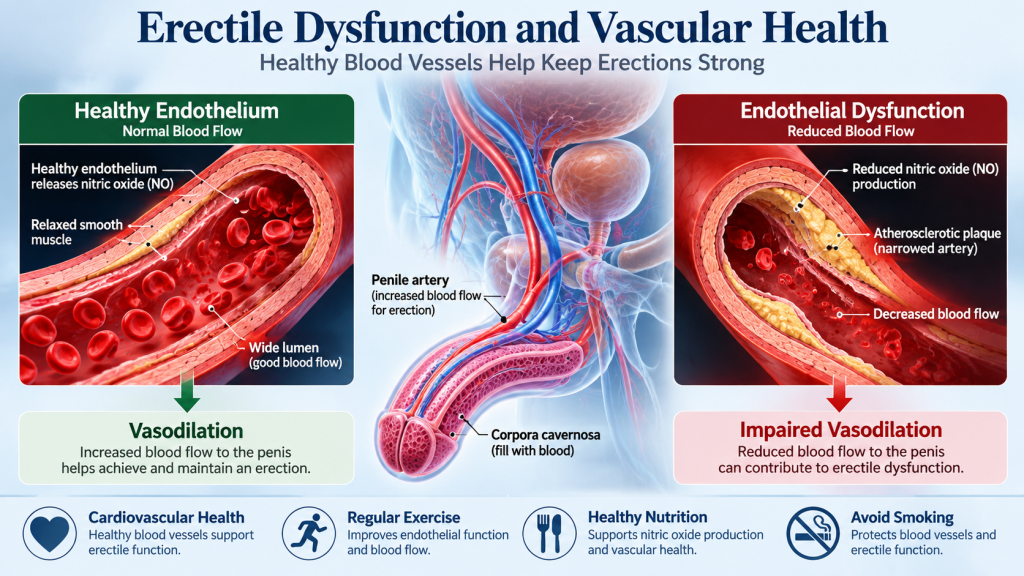
Healthy erections depend on the endothelium, the thin layer of cells lining the inside of blood vessels. The endothelium helps regulate vascular tone partly by producing nitric oxide, a signaling molecule essential for normal vasodilation.
During sexual stimulation, nitric oxide activates pathways that relax smooth muscle in the penile arteries and erectile tissue. As these vessels expand, blood flow increases and pressure within the corpora cavernosa rises, helping produce and maintain an erection.
When endothelial function becomes impaired, nitric oxide availability may decrease and the arteries may not dilate as effectively. Conditions such as hypertension, diabetes, insulin resistance, smoking, abnormal cholesterol levels, obesity, and physical inactivity can contribute to endothelial dysfunction and vascular disease.
This explains why erectile dysfunction can sometimes represent more than an isolated sexual problem. The same vascular processes affecting penile circulation may also affect arteries elsewhere in the body.
7 Vascular Warning Signs Men With Erectile Dysfunction Should Know
Vascular erectile dysfunction often develops progressively. A man may initially notice that erections are less firm, require more stimulation, or are more difficult to maintain. Over time, erectile reliability may continue to decline.
A gradual pattern can differ from erectile difficulties that appear suddenly because of acute stress, anxiety, relationship factors, or certain medications. Although symptoms alone cannot determine the cause, progressive erectile dysfunction may justify evaluation of cardiovascular and metabolic risk factors.
High Blood Pressure
High blood pressure can gradually damage the endothelium and reduce the ability of arteries to dilate normally. Over time, this can impair blood flow throughout the body, including circulation to the penis.
Some men with hypertension may therefore experience erectile dysfunction even before other vascular symptoms become obvious. In addition, certain blood pressure medications can contribute to erectile difficulties in some patients, so both the underlying condition and the medication regimen should be considered during evaluation.
High Cholesterol and Atherosclerosis
Elevated LDL cholesterol and other lipid abnormalities can contribute to atherosclerosis, a process in which plaque develops within artery walls. As arteries become narrowed or less flexible, blood flow may decline.
Because the penile arteries are smaller than many coronary arteries, reduced vascular function may become noticeable during erections before a man develops obvious symptoms such as chest discomfort or reduced exercise tolerance. Erectile dysfunction does not prove that a man has coronary artery disease, but persistent ED combined with abnormal cholesterol or other cardiovascular risk factors warrants appropriate medical assessment.
Diabetes or Insulin Resistance
Diabetes and insulin resistance can affect erectile function through several pathways. Chronically elevated blood glucose can damage blood vessels, impair endothelial function, reduce nitric oxide signaling, and contribute to peripheral nerve dysfunction.
Insulin resistance may also occur alongside abdominal obesity, hypertension, abnormal cholesterol, and systemic inflammation—a combination of metabolic risk factors that can further compromise vascular health. For men with persistent erectile dysfunction, evaluating glucose metabolism may therefore provide important information about both sexual and overall cardiometabolic health.
Reduced Exercise Capacity or Leg Symptoms
Vascular disease does not affect only the heart or penile circulation. Reduced blood flow to the legs can sometimes cause fatigue, heaviness, cramping, or discomfort during walking or exercise. These symptoms may suggest peripheral artery disease, particularly when they repeatedly occur with physical activity and improve with rest.
A man experiencing both erectile dysfunction and new exercise-related leg symptoms should discuss them with his physician. The combination does not establish a diagnosis, but it may justify a more comprehensive vascular assessment.
Loss of Morning Erections
Spontaneous erections during sleep and upon waking are influenced by neurological, hormonal, and vascular function. An occasional absence of a morning erection is common and does not necessarily indicate a medical problem.
However, a persistent decline in morning erections—particularly when accompanied by difficulty achieving erections during sexual activity—may warrant evaluation. Vascular impairment is one possible contributor, although low testosterone, sleep disorders, neurological conditions, medications, and other factors can also affect spontaneous erections.
Multiple Cardiovascular Risk Factors
Erectile dysfunction becomes particularly important from a vascular perspective when it occurs alongside several cardiovascular risk factors. These may include hypertension, diabetes, insulin resistance, abnormal cholesterol, obesity, smoking, physical inactivity, or a family history of premature cardiovascular disease.
The presence of erectile dysfunction does not mean that a cardiovascular event will occur. However, ED can provide an opportunity to identify modifiable risk factors earlier and to evaluate overall vascular health rather than treating erectile symptoms in isolation.
How Doctors Evaluate Erectile Dysfunction and Vascular Health
When erectile dysfunction may have a vascular component, evaluation should look beyond erectile symptoms alone. A clinician may review blood pressure, cardiovascular history, medications, smoking history, physical activity, body composition, family history, and other cardiovascular risk factors.
Laboratory testing may include fasting glucose or hemoglobin A1c, a lipid profile, and selected hormone testing when clinically appropriate. Testosterone evaluation may be particularly relevant when erectile dysfunction occurs with reduced libido, fatigue, loss of muscle mass, or other symptoms suggestive of androgen deficiency.
The goal is not to assume that every case of erectile dysfunction is caused by vascular disease. Rather, a comprehensive evaluation can help distinguish vascular, hormonal, neurological, medication-related, and psychological contributors so treatment can be individualized.
Improving Vascular Health May Support Erectile Function
When erectile dysfunction and vascular health are connected, treatment should address both erectile symptoms and the underlying cardiovascular or metabolic risk factors. Depending on the individual, this may include improving blood pressure control, glucose regulation, cholesterol management, physical activity, body composition, sleep, and smoking cessation.
Improving erectile dysfunction and vascular health often includes attention to regular physical activity. Aerobic and resistance exercise can support endothelial function, circulation, insulin sensitivity, and cardiovascular fitness. A dietary pattern emphasizing vegetables, fruits, legumes, nuts, fish, healthy fats, and minimally processed foods may also support vascular health.
Medical treatment for erectile dysfunction may still be appropriate. However, medications that improve erections do not replace evaluation and management of underlying vascular risk. For many men, the most effective strategy combines appropriate ED treatment with attention to long-term metabolic and cardiovascular health.
The Bottom Line on Erectile Dysfunction and Vascular Health
Erectile dysfunction and vascular health are closely connected because normal erections depend on healthy arteries, endothelial function, nitric oxide signaling, and adequate blood flow. Persistent or gradually worsening ED can sometimes provide an early opportunity to identify vascular or metabolic risk factors that have not yet produced other symptoms.
Understanding erectile dysfunction and vascular health does not mean assuming that every man with ED has cardiovascular disease. Persistent ED should also not simply be dismissed as a normal part of aging. A comprehensive evaluation can help identify the contributing factors and guide an individualized treatment strategy.
For men in Fort Lauderdale and South Florida, a physician-directed evaluation can address erectile function while also considering testosterone status, metabolic health, circulation, medications, lifestyle, and cardiovascular risk.