
Understanding Testosterone Testing
Testosterone testing is an important part of evaluating men who report symptoms such as reduced libido, fatigue, decreased muscle mass, changes in body composition, erectile difficulties, or reduced physical performance. However, interpreting testosterone results involves more than looking at a single laboratory number.
Testosterone circulates in several forms, and factors such as sex hormone-binding globulin (SHBG), age, medications, metabolic health, sleep, illness, and the time of day the blood sample is collected can influence the results. For this reason, total testosterone and free testosterone may provide different information about a man’s hormonal status.
A properly performed evaluation considers symptoms together with laboratory findings rather than diagnosing testosterone deficiency from one isolated result. Understanding what the different testosterone measurements represent can help men have a more informed discussion with their physician about whether additional evaluation or treatment is appropriate.
7 Important Facts About Testosterone Testing
1. Total Testosterone Is Usually the Starting Point
Total testosterone measures the testosterone circulating in the bloodstream in both bound and unbound forms. It is commonly used as the initial laboratory test when testosterone deficiency is suspected.
A total testosterone result should not be interpreted in isolation. Testosterone levels vary between individuals and can fluctuate because of sleep, acute illness, caloric restriction, medications, and other physiological factors. Clinical symptoms and the circumstances under which the blood sample was obtained are therefore important when interpreting the result.
When an initial testosterone level is unexpectedly low, repeat testing may be appropriate before making treatment decisions.
2. Free Testosterone Can Provide Additional Information
Free testosterone refers to the small fraction of circulating testosterone that is not bound to proteins. Although it represents only a small percentage of total testosterone, it is biologically available to tissues and can provide useful additional information in selected patients.
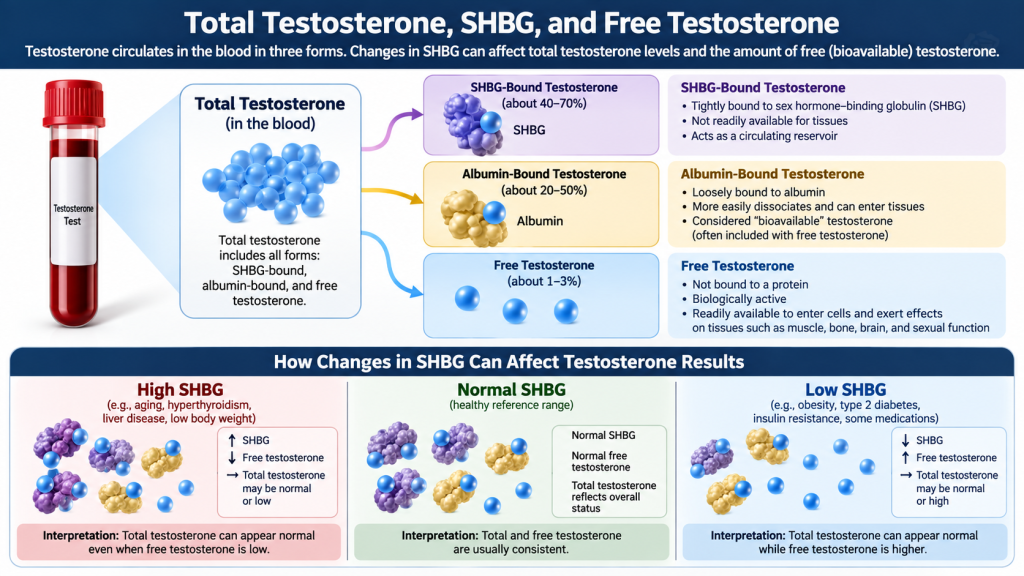
A man can have a total testosterone level that appears within the laboratory reference range while having a lower free testosterone level, particularly when SHBG is elevated. Conversely, low SHBG can produce a relatively low total testosterone measurement while free testosterone remains less affected.
For this reason, free testosterone may be especially useful when total testosterone results are borderline or when a condition that alters SHBG is suspected. The method used to measure or calculate free testosterone also matters, so results should be interpreted in the context of the laboratory methodology and the overall clinical picture.
3. SHBG Can Change How Testosterone Results Are Interpreted
Sex hormone-binding globulin, or SHBG, is a protein produced primarily by the liver that binds testosterone and other sex hormones in the bloodstream. Changes in SHBG can influence the relationship between total testosterone and the amount of testosterone available to tissues.
Higher SHBG levels can be associated with aging, certain liver conditions, thyroid disorders, some medications, and other physiological factors. When SHBG is elevated, total testosterone may appear adequate even though calculated or measured free testosterone is lower.
Lower SHBG levels are commonly associated with obesity, insulin resistance, type 2 diabetes, and certain other metabolic conditions. In these situations, total testosterone may appear lower, while free testosterone provides additional context.
Measuring SHBG can therefore be useful when total testosterone does not appear to match a patient’s symptoms or when free testosterone needs to be interpreted more accurately.
4. The Time of Day Can Affect Testosterone Results
Testosterone levels follow a daily rhythm and are generally highest earlier in the day, particularly in younger men. For this reason, the timing of blood collection can influence the interpretation of testosterone testing.
When evaluating possible testosterone deficiency, morning testing is commonly recommended, especially for an initial measurement. Sleep patterns should also be considered because testosterone secretion is closely related to sleep, and shift work or significant sleep disruption may alter the usual daily pattern.
A single low result obtained under less-than-ideal circumstances should therefore be interpreted cautiously. If the result is inconsistent with the clinical picture, repeating the measurement under appropriate conditions can provide more reliable information.
5. One Low Testosterone Result Is Usually Not Enough
Testosterone levels can vary from day to day. Temporary factors such as inadequate sleep, acute illness, significant calorie restriction, intense physical stress, and certain medications may lower testosterone concentrations.
For this reason, a single low testosterone result does not necessarily establish persistent testosterone deficiency. When an initial result is low, repeat morning testosterone testing is commonly used to confirm that the finding is reproducible before considering long-term treatment.
Laboratory results should also be interpreted together with symptoms. A biochemical value and a patient’s clinical presentation provide more useful information together than either does alone.
6. Symptoms Matter as Much as the Laboratory Number
Testosterone testing is most useful when laboratory results are interpreted together with a man’s symptoms and medical history. Testosterone deficiency can be associated with reduced sexual desire, fewer spontaneous erections, decreased energy, reduced muscle mass or strength, increased body fat, and changes in mood or motivation.
However, these symptoms are not specific to low testosterone. Sleep disorders, thyroid disease, depression, medication effects, obesity, diabetes, chronic illness, and other conditions can produce similar complaints.
A comprehensive evaluation therefore looks for alternative or contributing causes rather than treating a laboratory value alone. The objective is to determine whether the symptoms and repeatedly abnormal hormone measurements fit a clinically meaningful pattern.
7. Additional Hormone Tests May Help Identify the Cause
When testosterone testing repeatedly shows low levels, additional laboratory evaluation may help determine why. Depending on the clinical situation, this may include luteinizing hormone (LH), follicle-stimulating hormone (FSH), prolactin, SHBG, and free testosterone, along with other tests selected according to symptoms and medical history.
LH and FSH can provide information about signaling between the pituitary gland and the testes. This can help distinguish between patterns suggesting impaired testicular testosterone production and those involving reduced stimulation from the hypothalamic-pituitary system.
Prolactin testing may also be appropriate in selected men, particularly when low testosterone occurs with specific symptoms or unexpectedly low gonadotropin levels. The purpose of additional testing is not simply to collect more laboratory values, but to identify potentially reversible or clinically important contributors before deciding on treatment.
What Testosterone Levels Are Considered Low?
There is no single testosterone number that should be interpreted independently of symptoms, testing conditions, laboratory methodology, and clinical context. Reference ranges can also vary among laboratories.
Professional guidelines generally emphasize both consistently low testosterone concentrations and compatible symptoms or signs when evaluating testosterone deficiency. Some guidelines use a total testosterone concentration around 300 ng/dL as a practical diagnostic threshold, while others emphasize laboratory-specific lower reference limits and standardized assays.
Borderline results may require additional interpretation, particularly when SHBG is abnormal or when total testosterone does not appear consistent with the patient’s symptoms. In these situations, free testosterone and SHBG can provide additional information.
The purpose of testosterone testing is therefore not simply to determine whether a number falls inside or outside a reference range. The goal is to determine whether the overall hormonal pattern, repeated measurements, symptoms, and clinical history support a diagnosis that requires further evaluation or treatment.
Why Testosterone Testing Matters Before Considering TRT
Testosterone replacement therapy should not be based on symptoms alone or on a single laboratory result. Before considering TRT, the evaluation should determine whether testosterone levels are consistently low, whether compatible symptoms are present, and whether another condition could be contributing to the hormonal pattern.
Depending on the individual, evaluation may also include assessment of fertility goals, prostate health, hematocrit or hemoglobin, cardiovascular risk factors, sleep apnea, medications, and other conditions that may influence the safety or appropriateness of treatment.
When testosterone deficiency is confirmed and treatment is considered appropriate, follow-up laboratory testing is also important. Monitoring allows the physician to evaluate treatment response, testosterone levels, hematocrit, and other clinically relevant parameters while adjusting therapy when necessary.
The objective is not simply to increase the testosterone level. Treatment should be directed toward an appropriately diagnosed clinical condition while balancing potential benefits, risks, and the patient’s individual health goals.
The Bottom Line on Testosterone Testing
Testosterone testing provides much more information when it is interpreted as part of a complete clinical evaluation rather than as a single laboratory number. Total testosterone is usually the starting point, but free testosterone and SHBG may provide important additional information when results are borderline or do not correspond with symptoms.
Timing also matters. Testosterone concentrations can fluctuate, which is why appropriately timed and, when indicated, repeat measurements can help establish whether a low result is persistent.
For men experiencing symptoms potentially associated with testosterone deficiency, physician-directed evaluation can help determine whether hormonal, metabolic, sleep-related, medication-related, or other health factors are contributing. When testosterone deficiency is confirmed, this information also provides the foundation for deciding whether testosterone replacement therapy or another treatment approach is appropriate.