
Understanding Low Testosterone and Cardiovascular Health
Low testosterone and cardiovascular health are closely connected because testosterone physiology intersects with several systems involved in vascular and metabolic health. Men with low testosterone may also have obesity, insulin resistance, type 2 diabetes, abnormal lipid levels, hypertension, or other cardiovascular risk factors.
However, an association does not necessarily mean that low testosterone directly causes cardiovascular disease. Testosterone levels can be influenced by age, body composition, chronic illness, medications, sleep disorders, and overall metabolic health. Many of these same factors independently affect cardiovascular risk.
This relationship is clinically important because symptoms such as fatigue, reduced exercise capacity, decreased sexual function, and loss of muscle mass may occur alongside both hormonal and cardiometabolic problems.
For this reason, low testosterone and cardiovascular health should be evaluated together rather than considering a testosterone measurement in isolation. The goal is to identify confirmed hormonal deficiency while also recognizing potentially modifiable cardiovascular and metabolic risk factors.
7 Important Connections Between Low Testosterone and Cardiovascular Health
1. Low Testosterone Is Associated With Cardiovascular Risk Factors
Men with low testosterone frequently have cardiovascular risk factors such as obesity, insulin resistance, type 2 diabetes, hypertension, and abnormal lipid levels. These conditions can occur together and may reflect underlying metabolic dysfunction rather than a single isolated hormonal problem.
Excess visceral fat is particularly relevant because it is associated with inflammation, insulin resistance, and hormonal changes that may contribute to lower circulating testosterone levels. At the same time, reduced muscle mass and physical activity can further affect metabolic health.
Importantly, these associations do not prove that low testosterone itself causes cardiovascular disease. Many factors that contribute to cardiovascular risk can also suppress testosterone production, making the relationship complex and potentially bidirectional.
When low testosterone and cardiovascular health concerns occur together, evaluating body composition, blood pressure, glucose regulation, lipid levels, physical activity, and other established cardiovascular risk factors provides a more complete clinical picture.
2. Metabolic Health Links Testosterone and the Cardiovascular System
Metabolic health is an important connection between testosterone levels and cardiovascular risk. Insulin resistance, type 2 diabetes, abdominal obesity, and metabolic syndrome are commonly associated with lower testosterone levels in men.
These relationships can operate in both directions. Increased visceral fat and insulin resistance may contribute to hormonal changes that suppress testosterone production, while low testosterone may be associated with changes in body composition, including reduced lean mass and increased fat mass.
The same metabolic abnormalities are established contributors to cardiovascular disease. Elevated blood glucose, abnormal lipid levels, hypertension, and excess visceral fat can progressively affect vascular function and increase long-term cardiovascular risk.
For this reason, evaluating low testosterone and cardiovascular health should include attention to glucose regulation, waist circumference or body composition, blood pressure, lipid levels, nutrition, and physical activity rather than focusing exclusively on testosterone.
3. Testosterone and Body Composition Can Influence Heart Health
Testosterone plays a role in maintaining lean body mass and normal body composition. Men with testosterone deficiency may experience reduced muscle mass and an increase in body fat, particularly when low testosterone occurs alongside aging, physical inactivity, or metabolic dysfunction.
Changes in body composition can have cardiovascular implications. Increased visceral fat is associated with insulin resistance, inflammation, abnormal lipid levels, and other metabolic abnormalities that contribute to cardiovascular risk.
Muscle mass is also metabolically important. Skeletal muscle helps regulate glucose utilization and supports physical function, exercise capacity, and metabolic health. Loss of muscle combined with increasing abdominal fat may therefore worsen the overall cardiometabolic profile.
When low testosterone and cardiovascular health concerns coexist, improving body composition through appropriate resistance exercise, aerobic activity, nutrition, weight management, and treatment of underlying medical conditions can be an important part of a comprehensive strategy.
4. Endothelial Function and Blood Vessels Matter
Healthy arteries depend on normal endothelial function. The endothelium helps regulate vascular tone, blood flow, inflammation, and nitric oxide signaling throughout the cardiovascular system.
Cardiometabolic conditions such as diabetes, hypertension, smoking, abnormal lipid levels, and obesity can impair endothelial function over time. These same conditions are also common in men with low testosterone, which can make it difficult to separate hormonal effects from broader vascular risk.
Testosterone may influence several aspects of vascular physiology, but the relationship is complex and should not be interpreted as proof that raising testosterone directly improves cardiovascular outcomes.
When low testosterone and cardiovascular health concerns occur together, attention to endothelial risk factors—including blood pressure, glucose control, lipid management, physical activity, smoking status, and body composition—is essential.
5. Erectile Dysfunction May Provide an Early Cardiovascular Clue
Erectile dysfunction and cardiovascular disease share several risk factors, including diabetes, hypertension, abnormal cholesterol levels, obesity, smoking, and physical inactivity. Both can involve impaired endothelial function and reduced vascular health.
Because the penile arteries are relatively small, vascular dysfunction may sometimes become clinically apparent as erectile difficulties before cardiovascular disease produces symptoms in larger arterial territories.
Low testosterone can coexist with erectile dysfunction, particularly when reduced libido or other symptoms of testosterone deficiency are present. However, erectile dysfunction should not automatically be attributed to low testosterone because vascular, neurological, medication-related, and psychological factors are also common causes.
When low testosterone and cardiovascular health concerns occur alongside erectile dysfunction, the sexual symptom can provide an additional reason to assess cardiovascular and metabolic risk rather than treating testosterone or erectile function in isolation.
6. Cardiovascular Risk Should Be Assessed Before and During TRT
Testosterone replacement therapy should be considered within the context of a man’s overall health rather than based on a laboratory value alone. Before treatment, clinicians should confirm testosterone deficiency and evaluate relevant medical conditions and cardiovascular risk factors.
Blood pressure, lipid levels, glucose regulation, smoking status, body composition, physical activity, sleep apnea risk, and personal cardiovascular history may all contribute important information when developing an individualized treatment plan.
Monitoring remains important after testosterone therapy begins. Depending on the patient and treatment regimen, follow-up may include assessment of symptoms, testosterone levels, hematocrit, blood pressure, and other clinically relevant parameters.
For men with low testosterone and cardiovascular health concerns, testosterone therapy should complement—not replace—appropriate management of established cardiovascular risk factors and underlying cardiometabolic disease.
7. Testosterone Therapy and Cardiovascular Safety Require Individualized Decisions
The cardiovascular safety of testosterone replacement therapy has been studied extensively, particularly in men who already have cardiovascular risk factors. Current evidence does not support assuming that appropriately prescribed testosterone therapy either prevents cardiovascular disease or inevitably increases cardiovascular events in every man.
Treatment decisions should therefore be individualized. The presence of confirmed testosterone deficiency, symptoms, age, cardiovascular history, hematocrit, blood pressure, sleep apnea, prostate health, fertility goals, medications, and other clinical factors may influence whether testosterone therapy is appropriate.
Men with recent or unstable cardiovascular disease require particular clinical consideration. Testosterone therapy should not be viewed as a substitute for established cardiovascular prevention strategies such as blood pressure control, lipid management, diabetes management, smoking cessation, appropriate exercise, nutrition, and weight management.
For men with low testosterone and cardiovascular health concerns, the objective is to treat confirmed hormonal deficiency when appropriate while simultaneously addressing the cardiovascular risk factors that have the strongest evidence for improving long-term health.
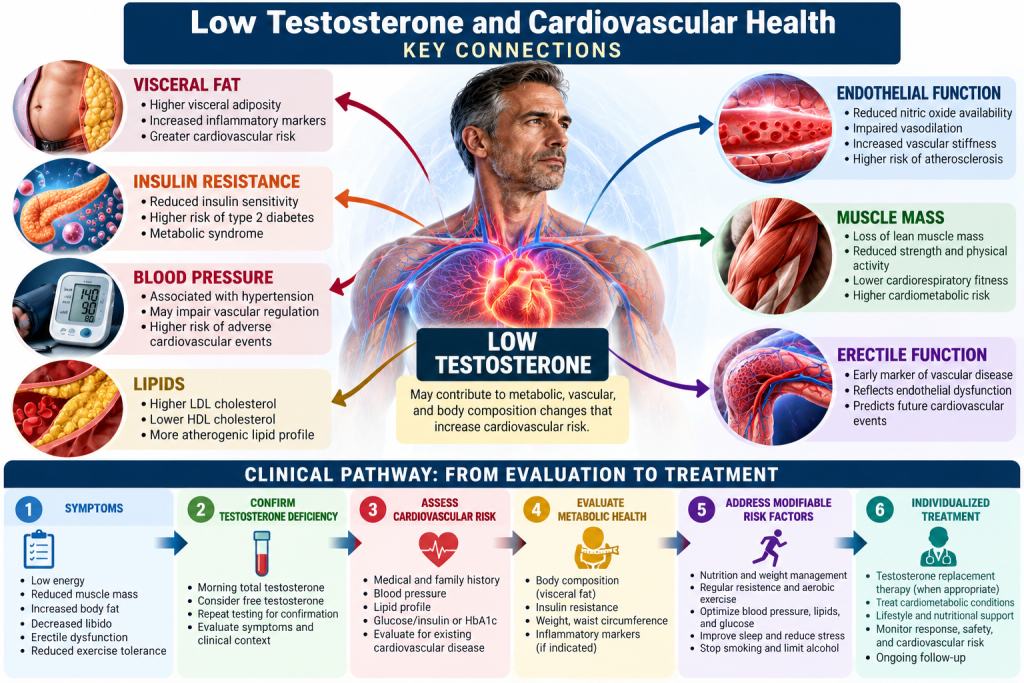
How to Evaluate Low Testosterone and Cardiovascular Health
Evaluation should determine whether testosterone deficiency is truly present while also identifying cardiovascular and metabolic conditions that may contribute to symptoms or influence treatment decisions.
A comprehensive history may include symptoms of testosterone deficiency, cardiovascular history, family history, smoking status, physical activity, sleep quality, medications, erectile function, body-weight changes, and conditions such as hypertension, diabetes, obesity, and sleep apnea.
When testosterone deficiency is suspected, appropriately timed testosterone measurements are important. A low result generally requires confirmation, while additional hormonal testing may be appropriate depending on the clinical circumstances.
Cardiovascular assessment should be individualized according to age, symptoms, medical history, and established risk factors. Blood pressure, lipid levels, glucose or hemoglobin A1c, body composition, kidney function, and other testing may be considered when clinically appropriate.
The purpose of evaluating low testosterone and cardiovascular health together is not to assume that one condition caused the other. It is to identify treatable hormonal, metabolic, and cardiovascular factors and develop an individualized strategy based on the complete clinical picture.
How to Protect Cardiovascular Health When Testosterone Is Low
Protecting cardiovascular health begins with identifying and managing established risk factors rather than focusing exclusively on testosterone levels. Blood pressure, glucose regulation, lipid levels, smoking, physical activity, body composition, sleep, and nutrition all contribute to long-term cardiovascular risk.
Regular aerobic activity and resistance training can support cardiovascular fitness, insulin sensitivity, muscle mass, and healthy body composition. Exercise programs should be individualized according to a person’s medical history, physical capacity, and cardiovascular status.
Nutrition patterns emphasizing minimally processed foods, vegetables, fruits, appropriate protein intake, healthy fats, and adequate fiber can support cardiometabolic health. Weight reduction may be particularly beneficial for men with excess visceral fat, insulin resistance, or obesity.
Sleep disorders should also be addressed. Obstructive sleep apnea is associated with hypertension and cardiometabolic disease and may coexist with both obesity and testosterone deficiency.
For men receiving testosterone therapy, appropriate follow-up should occur alongside—not instead of—routine cardiovascular prevention. The goal is to manage confirmed hormonal deficiency while continuing evidence-based strategies that reduce modifiable cardiovascular risk.
The Bottom Line on Low Testosterone and Cardiovascular Health
Low testosterone and cardiovascular health are connected through a complex relationship involving age, body composition, metabolic health, vascular function, chronic disease, sleep, medications, and lifestyle factors.
Men with low testosterone frequently have cardiovascular risk factors, but an association does not prove that testosterone deficiency directly causes cardiovascular disease. Likewise, correcting a low testosterone level should not be considered a substitute for established cardiovascular prevention.
When testosterone deficiency is suspected, diagnosis should be based on compatible symptoms together with appropriately obtained and confirmed laboratory measurements. Cardiovascular and metabolic risk factors should be evaluated at the same time when clinically appropriate.
For men with confirmed testosterone deficiency, individualized treatment may improve relevant symptoms and body composition. However, long-term cardiovascular health still depends heavily on controlling blood pressure, glucose, lipids, smoking exposure, physical inactivity, excess body fat, and other modifiable risk factors.
The most comprehensive approach to low testosterone and cardiovascular health therefore combines appropriate hormonal evaluation with evidence-based cardiovascular risk assessment, lifestyle intervention, and individualized medical care.