
Understanding Low Testosterone and Erectile Dysfunction
Low testosterone and erectile dysfunction can occur together, but they are not the same condition. Testosterone plays an important role in sexual desire and contributes to normal sexual function, while erections depend heavily on healthy blood vessels, nerves, smooth muscle, and adequate blood flow to the penis.
A man with testosterone deficiency may experience reduced libido, fewer spontaneous or morning erections, lower energy, and other symptoms. However, erectile dysfunction frequently occurs in men whose testosterone levels are within the expected range.
Vascular disease, diabetes, hypertension, obesity, neurological conditions, medications, psychological factors, and lifestyle habits can all contribute to erectile difficulties. In some men, several of these factors are present simultaneously.
For this reason, low testosterone and erectile dysfunction should be evaluated separately but within the same clinical picture. Identifying whether hormonal deficiency, vascular dysfunction, metabolic disease, medication effects, psychological factors, or a combination of causes is involved can help guide appropriate treatment.
7 Important Connections Between Low Testosterone and Erectile Dysfunction
1. Testosterone Influences Sexual Desire More Than Blood Flow
Testosterone has an important role in male sexual desire, sexual thoughts, and overall interest in sexual activity. When testosterone levels are persistently low, some men notice reduced libido and fewer spontaneous sexual responses.
An erection, however, is primarily a neurovascular event. Sexual stimulation triggers neurological signals that promote nitric oxide release, relaxation of penile smooth muscle, and increased arterial blood flow into the erectile tissues.
This distinction helps explain why restoring testosterone does not automatically correct every case of erectile dysfunction. A man may have adequate sexual desire but impaired penile blood flow, while another man may have physically adequate erectile function but little sexual interest because of testosterone deficiency or another cause.
Understanding this difference is fundamental when evaluating low testosterone and erectile dysfunction because libido and erectile mechanics may require different diagnostic and treatment approaches.
2. Erectile Dysfunction Can Be an Early Sign of Vascular Disease
The penile arteries are relatively small, which means impaired endothelial function and atherosclerotic changes may affect erectile blood flow before cardiovascular disease produces symptoms elsewhere in the body.
For this reason, erectile dysfunction—particularly when it develops gradually without an obvious psychological or medication-related explanation—can sometimes provide an early indication of underlying vascular or cardiometabolic disease.
Risk factors such as hypertension, diabetes, abnormal cholesterol levels, obesity, smoking, and physical inactivity can impair endothelial function and reduce nitric oxide availability, making it more difficult to achieve or maintain an erection.
When low testosterone and erectile dysfunction occur together, cardiovascular and metabolic risk factors should therefore be considered rather than assuming that testosterone deficiency alone explains the erectile problem.
3. Low Testosterone Can Reduce Libido and Spontaneous Erections
Reduced sexual desire is one of the more characteristic sexual symptoms associated with testosterone deficiency. Some men also notice fewer spontaneous or morning erections when testosterone levels remain persistently low.
These changes are clinically different from being unable to achieve sufficient penile rigidity during sexual activity. Libido reflects sexual interest and central nervous system signaling, while erection quality also depends on vascular, neurological, and smooth-muscle function.
The distinction matters because a man may describe “erectile dysfunction” when the primary change is actually reduced sexual desire. Conversely, another man may have strong libido but difficulty maintaining an erection because of impaired vascular function.
When evaluating low testosterone and erectile dysfunction, asking separately about libido, morning erections, erection rigidity, ability to maintain an erection, and the timing of symptoms can provide important clues about the underlying cause.
4. Diabetes and Metabolic Health Can Affect Both Testosterone and Erections
Diabetes, insulin resistance, obesity, and other metabolic conditions can influence both testosterone levels and erectile function. These conditions frequently overlap, particularly in middle-aged and older men.
Chronically elevated blood glucose can damage blood vessels and peripheral nerves that are essential for normal erections. Insulin resistance, inflammation, and endothelial dysfunction may further reduce nitric oxide signaling and impair penile blood flow.
Obesity can also affect hormonal physiology. Increased visceral fat is associated with changes in SHBG, insulin sensitivity, inflammatory signaling, and hypothalamic-pituitary-testicular function, all of which may influence circulating testosterone levels.
For men with low testosterone and erectile dysfunction, evaluating glucose regulation, body composition, blood pressure, lipid status, physical activity, and other cardiometabolic factors can identify potentially modifiable contributors to both conditions.
5. Nitric Oxide Is Essential for Erectile Function
Nitric oxide is one of the key signaling molecules involved in producing an erection. During sexual stimulation, nitric oxide activates pathways that relax smooth muscle within penile blood vessels and erectile tissue, allowing increased blood flow into the penis.
Conditions that impair endothelial function—such as diabetes, hypertension, smoking, abnormal cholesterol levels, and vascular disease—can reduce nitric oxide availability and contribute to erectile dysfunction.
Testosterone may interact with aspects of nitric oxide signaling and sexual physiology, but adequate testosterone cannot compensate for significant vascular impairment. This is another reason why correcting a low testosterone level does not necessarily restore normal erections in every man.
When low testosterone and erectile dysfunction occur together, assessing both hormonal status and vascular health provides a more complete understanding of the mechanisms contributing to the symptoms.
6. Medications and Psychological Factors Can Contribute to ED
Erectile function can be affected by medications, psychological factors, or both. Certain antihypertensive medications, antidepressants, opioids, and other drugs may contribute to sexual dysfunction in some men, although effects vary considerably among individuals and medication classes.
Performance anxiety, depression, relationship stress, and chronic psychological stress can also interfere with the neurological and physiological processes required for an erection. In some cases, erectile difficulties begin after an isolated episode and persist because anxiety develops around subsequent sexual encounters.
These factors can coexist with testosterone deficiency. Finding a low testosterone level therefore does not eliminate the need to review medications, emotional health, relationship factors, and the circumstances in which erectile difficulties occur.
When evaluating low testosterone and erectile dysfunction, a comprehensive history can help distinguish hormonal, vascular, medication-related, neurological, and psychological contributors. Prescribed medications should not be discontinued or changed without appropriate medical guidance.
7. TRT May Improve Erectile Function in Some Men With Confirmed Testosterone Deficiency
Testosterone replacement therapy may improve sexual desire and certain aspects of sexual function in men who have both compatible symptoms and confirmed testosterone deficiency. However, the erectile response to TRT varies considerably.
When significant vascular disease, diabetes, neurological dysfunction, medication effects, or psychological factors are contributing to erectile dysfunction, restoring testosterone alone may not produce adequate erections.
Some men with confirmed testosterone deficiency and erectile dysfunction may require treatment directed at both conditions. Depending on the clinical situation, this can include lifestyle and cardiometabolic interventions, management of contributing medical conditions, and established erectile dysfunction therapies in addition to appropriately indicated testosterone treatment.
The key is to avoid assuming that every case of erectile dysfunction in a man with low testosterone is caused by the hormone deficiency. Treatment is most effective when the relevant hormonal, vascular, neurological, metabolic, medication-related, and psychological contributors are identified.
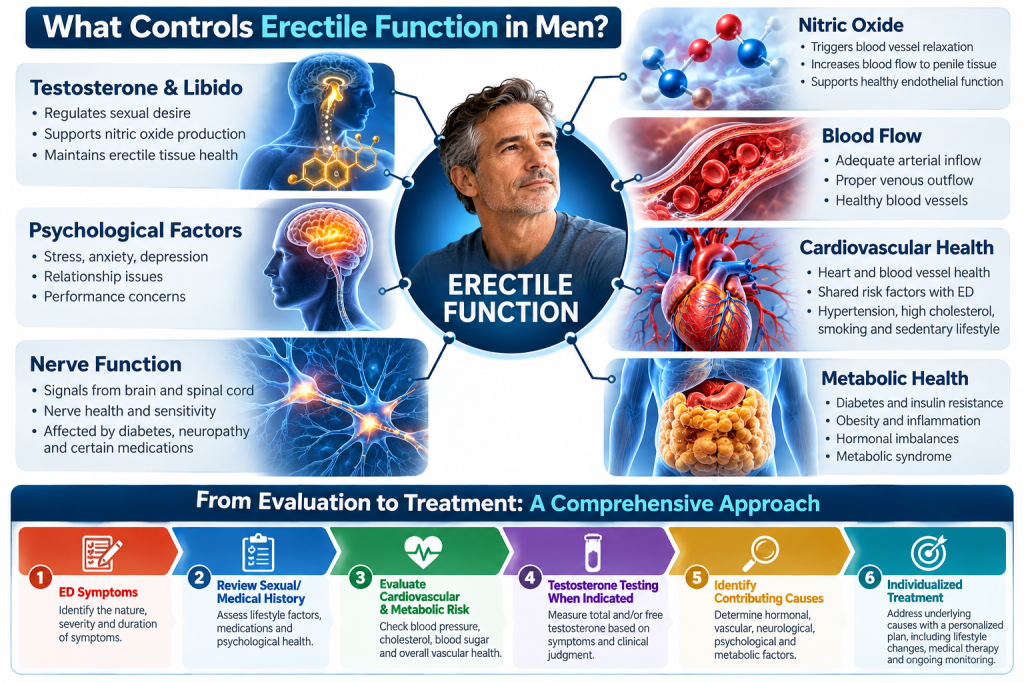
How to Evaluate Low Testosterone and Erectile Dysfunction
Evaluation should determine whether erectile difficulties are primarily hormonal, vascular, neurological, medication-related, psychological, or multifactorial. A detailed sexual and medical history is often one of the most informative parts of this assessment.
The clinician may ask about sexual desire, morning or spontaneous erections, erection rigidity, ability to maintain an erection, onset and progression of symptoms, cardiovascular risk factors, diabetes, medications, sleep, psychological stress, and relationship factors.
When testosterone deficiency is suspected, evaluation commonly begins with appropriately timed total testosterone testing. Low results generally require confirmation, and additional testing such as free testosterone, SHBG, LH, or other laboratory studies may be appropriate depending on the clinical situation.
Blood pressure, glucose regulation, lipid status, body composition, and cardiovascular risk also deserve consideration because erectile dysfunction can reflect underlying vascular disease.
The objective is not simply to determine whether testosterone is low. It is to identify the mechanisms responsible for the erectile problem so treatment can address the relevant causes.
Treating Erectile Dysfunction When Testosterone Is Low
Treatment should address the specific factors contributing to erectile dysfunction rather than focusing on testosterone alone. When genuine testosterone deficiency is confirmed, appropriate testosterone therapy may improve libido and may improve erectile function in some men.
However, men with vascular or metabolic erectile dysfunction may require additional treatment. Lifestyle measures that improve cardiovascular health—including regular exercise, weight management when appropriate, smoking cessation, adequate sleep, and management of blood pressure, glucose, and cholesterol—can also support erectile health.
Phosphodiesterase type 5 inhibitors, commonly known as PDE5 inhibitors, are established treatments for many men with erectile dysfunction when medically appropriate. Other treatment options may be considered when oral therapy is ineffective, contraindicated, or insufficient.
The most appropriate strategy for low testosterone and erectile dysfunction is therefore individualized. Treating confirmed hormonal deficiency while simultaneously addressing vascular, metabolic, medication-related, neurological, and psychological contributors provides a more comprehensive approach to restoring sexual function.
The Bottom Line on Low Testosterone and Erectile Dysfunction
Low testosterone and erectile dysfunction can occur together, but one does not automatically cause the other. Testosterone has an important role in sexual desire and contributes to normal sexual function, while erection quality depends heavily on vascular, neurological, and smooth-muscle function.
Reduced libido and fewer spontaneous erections may raise suspicion for testosterone deficiency, while difficulty achieving or maintaining penile rigidity may reflect vascular disease, diabetes, medication effects, neurological conditions, psychological factors, or several causes acting together.
A comprehensive evaluation considers appropriately obtained testosterone measurements alongside cardiovascular and metabolic health, medications, lifestyle factors, psychological health, and the specific pattern of sexual symptoms.
When testosterone deficiency is confirmed, individualized treatment may improve sexual symptoms in selected men. However, effective management of erectile dysfunction often requires addressing both hormonal status and the other factors responsible for healthy penile blood flow and erectile function.