
Understanding Low Testosterone and Fatigue
Low testosterone and fatigue can occur together, but fatigue is a nonspecific symptom with many possible causes. Men with testosterone deficiency may report reduced energy, decreased motivation, diminished exercise capacity, or a general decline in vitality, yet these symptoms alone cannot establish that testosterone is low.
Sleep deprivation, obstructive sleep apnea, anemia, thyroid disorders, metabolic disease, nutritional deficiencies, chronic illness, psychological stress, and certain medications can all produce fatigue that resembles symptoms sometimes associated with testosterone deficiency.
The distinction is clinically important because treating testosterone when another condition is responsible for low energy may fail to address the underlying problem. Conversely, persistent fatigue accompanied by reduced libido, fewer spontaneous erections, loss of muscle mass, or other compatible symptoms may justify appropriate hormonal evaluation.
For this reason, low testosterone and fatigue should be assessed within the broader context of symptoms, sleep, metabolic health, medications, nutrition, medical history, and properly obtained laboratory testing.
7 Important Causes of Low Testosterone and Fatigue
1. True Testosterone Deficiency Can Contribute to Low Energy
Testosterone influences multiple tissues involved in physical function, body composition, sexual health, and overall well-being. When testosterone remains consistently below the normal physiological range, some men experience reduced energy or diminished vitality along with other symptoms.
Fatigue associated with testosterone deficiency rarely occurs in isolation. Reduced libido, fewer spontaneous erections, loss of muscle mass, decreased strength, changes in body composition, or reduced sexual function may provide additional clinical context.
However, symptoms cannot confirm testosterone deficiency by themselves. Testosterone concentrations vary according to time of day, illness, sleep, nutrition, medications, and other physiological factors.
A diagnosis therefore requires compatible symptoms together with appropriately obtained testosterone measurements and, when indicated, repeat testing rather than treating fatigue based on symptoms alone.
2. Poor Sleep and Sleep Apnea Can Cause Persistent Fatigue
Insufficient or fragmented sleep is one of the most common contributors to daytime fatigue. Even when a man spends enough hours in bed, repeated sleep interruptions can prevent normal restorative sleep and leave him feeling tired throughout the day.
Obstructive sleep apnea is particularly important because repeated airway obstruction can cause oxygen fluctuations and frequent brief awakenings that may not be remembered the following morning. Loud snoring, witnessed breathing pauses, morning headaches, daytime sleepiness, and waking unrefreshed can provide important clues.
Sleep problems can also complicate testosterone assessment. Normal testosterone secretion follows a daily rhythm that is influenced by sleep, while obesity and metabolic dysfunction—common in men with sleep apnea—may also be associated with lower testosterone concentrations.
When low testosterone and fatigue occur alongside poor sleep or symptoms of sleep apnea, evaluating sleep quality can therefore be as important as evaluating hormone levels.
3. Anemia Can Mimic Symptoms of Low Testosterone
Anemia reduces the blood’s capacity to carry oxygen to tissues and can cause persistent fatigue, weakness, reduced exercise tolerance, shortness of breath with exertion, dizziness, or difficulty concentrating. Several of these symptoms can overlap with complaints reported by men with testosterone deficiency.
The underlying causes of anemia vary considerably. Iron deficiency, vitamin B12 or folate deficiency, chronic kidney disease, gastrointestinal blood loss, inflammatory conditions, and other medical disorders may all contribute and require different approaches to treatment.
Testosterone also influences red blood cell production, which adds another layer of complexity when anemia and low testosterone coexist. Conversely, testosterone replacement can increase hemoglobin and hematocrit, making appropriate monitoring important during treatment.
When low testosterone and fatigue are accompanied by unexplained weakness or reduced exercise tolerance, a complete blood count and appropriate evaluation for anemia may help identify another treatable contributor.
4. Thyroid Disorders Can Affect Energy and Hormonal Health
Thyroid hormones regulate metabolism and influence energy production throughout the body. When thyroid function is reduced, men may experience fatigue, cold intolerance, constipation, weight gain, slowed thinking, dry skin, or decreased exercise tolerance.
Several of these symptoms overlap with those associated with testosterone deficiency, which means symptoms alone may not distinguish hypothyroidism from low testosterone.
Thyroid dysfunction can also influence sex hormone-binding globulin and alter the interpretation of total testosterone concentrations. In selected cases, evaluating free testosterone and SHBG may therefore provide additional information when total testosterone does not fit the clinical picture.
When low testosterone and fatigue occur together, thyroid function should be considered among the potential contributors, particularly when other symptoms suggest abnormal thyroid activity.
5. Metabolic Dysfunction Can Drain Energy
Insulin resistance, obesity, and abnormal glucose regulation can contribute to persistent fatigue and reduced physical performance. Large fluctuations in blood glucose, reduced metabolic flexibility, and excess visceral fat may all influence how energetic a person feels throughout the day.
These metabolic conditions are also frequently associated with lower testosterone concentrations in men. Obesity can affect SHBG levels and the hypothalamic-pituitary-testicular axis, while insulin resistance and chronic metabolic dysfunction may further complicate the hormonal picture.
Loss of skeletal muscle can intensify the problem because muscle is a major site of glucose disposal. Reduced muscle mass combined with increasing visceral fat can therefore contribute to worsening insulin sensitivity and declining metabolic health.
For men with low testosterone and fatigue, evaluating glucose regulation, body composition, physical activity, and other cardiometabolic risk factors can help identify potentially modifiable contributors to low energy.
6. Medications and Substances Can Affect Both Energy and Testosterone
Several medications can contribute to fatigue, changes in sexual function, or alterations in testosterone regulation. Opioids, glucocorticoids, some psychiatric medications, and certain other drugs may affect the hypothalamic-pituitary-gonadal axis or produce symptoms that overlap with testosterone deficiency.
Other medications may cause tiredness without directly lowering testosterone. Sedating antihistamines, some blood pressure medications, sleep medications, and other central nervous system depressants can reduce alertness or exercise tolerance in susceptible individuals.
Alcohol and other substances may also interfere with sleep quality, energy, metabolic health, and hormonal regulation, particularly when exposure is frequent or substantial.
A careful medication and substance review is therefore an important part of evaluating low testosterone and fatigue. Prescribed medications should not be stopped solely because fatigue develops; instead, potential effects and alternatives should be reviewed with the treating clinician.
7. Stress, Mood, and Chronic Illness Can Produce Similar Symptoms
Persistent psychological stress can affect sleep, concentration, motivation, appetite, physical activity, and perceived energy. Anxiety and depressive disorders can also cause fatigue, reduced motivation, sleep disturbance, and changes in sexual interest that may overlap with symptoms associated with testosterone deficiency.
Chronic medical conditions can produce similar effects. Cardiovascular disease, kidney disease, inflammatory disorders, infections, chronic pain, and other illnesses may reduce energy and physical performance through mechanisms unrelated to testosterone.
These conditions can also coexist with genuine testosterone deficiency. Finding one potential explanation for fatigue therefore does not automatically exclude another, particularly when symptoms are persistent or involve several physiological systems.
A comprehensive evaluation of low testosterone and fatigue should consider mental well-being, chronic medical conditions, sleep, medications, metabolic health, and hormonal findings rather than assuming that one laboratory value explains the entire clinical picture.
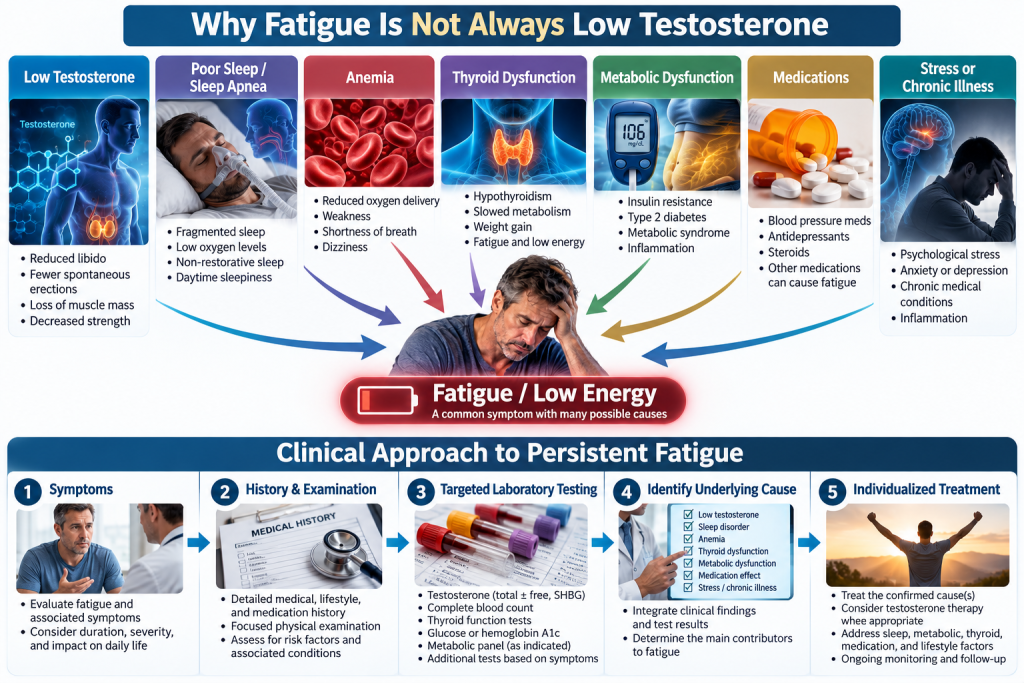
How to Evaluate Low Testosterone and Fatigue
When persistent fatigue occurs together with symptoms such as reduced libido, fewer spontaneous erections, decreased strength, loss of muscle mass, or declining physical performance, testosterone deficiency may be one consideration—but the evaluation should remain broad.
Testosterone assessment commonly begins with appropriately timed total testosterone testing. If the result is low, borderline, or inconsistent with the clinical picture, repeat testing and assessment of free testosterone and SHBG may provide additional information.
Depending on the individual’s symptoms and medical history, evaluation may also include a complete blood count, thyroid testing, glucose or hemoglobin A1c, metabolic assessment, medication review, nutritional evaluation, and investigation for sleep disorders such as obstructive sleep apnea.
The objective is not simply to determine whether testosterone is low. It is to identify which factors are actually contributing to fatigue so that potentially treatable conditions are not overlooked.
Will TRT Improve Fatigue When Testosterone Is Low?
Testosterone replacement therapy may improve certain symptoms in appropriately selected men with confirmed testosterone deficiency, but improvement in fatigue is not guaranteed. Energy levels are influenced by many physiological and psychological factors beyond testosterone.
When fatigue is primarily related to sleep apnea, anemia, thyroid dysfunction, metabolic disease, medication effects, inadequate nutrition, or another medical condition, raising testosterone may not correct the underlying cause.
For men with consistently low testosterone and compatible symptoms, TRT may be considered after an appropriate clinical evaluation. Treatment decisions should also account for fertility goals, hematocrit, prostate health, cardiovascular factors, medications, and other relevant medical considerations.
The most effective strategy is therefore to treat confirmed testosterone deficiency when appropriate while simultaneously addressing other identifiable contributors to low energy.
The Bottom Line on Low Testosterone and Fatigue
Low testosterone and fatigue can occur together, but fatigue alone is not specific enough to diagnose testosterone deficiency. Low energy can result from sleep disorders, anemia, thyroid dysfunction, metabolic disease, medications, chronic illness, psychological stress, nutritional problems, or several factors occurring simultaneously.
Testosterone deficiency becomes more clinically relevant when fatigue occurs together with other compatible findings such as reduced libido, fewer spontaneous erections, decreased muscle mass, reduced strength, or changes in body composition.
A comprehensive evaluation considers symptoms together with appropriately obtained testosterone measurements, sleep quality, blood counts, thyroid and metabolic health, medications, nutrition, and relevant medical conditions.
When testosterone deficiency is confirmed, individualized treatment may be appropriate, but the broader objective is to identify and address the actual contributors to reduced energy rather than assuming that testosterone is responsible for every case of fatigue.